
Ten Commandments for kids, one by one
The Ten Commandments for kids from Exodus 20: the Bible text, what each one means in simple words, an everyday example, and how churches number them.
 The Terra Sinai team 11 min read
In this article (8)
What does “honor your father and mother” look like on a regular Tuesday? This guide walks through the Ten Commandments for kids one at a time, with the exact words from Exodus 20, a plain-English meaning and an everyday example for each. If you need the short version first, here it is: love only God, don’t worship idols, respect God’s name, rest on the day of rest, honor your father and mother, protect life, be faithful in the family, don’t take what belongs to someone else, tell the truth, and be content with what you have.
Try one a night, with a few minutes of talk before lights-out; we quote the Berean Standard Bible throughout. Once your child knows all ten, Deuteronomy 5:6-21, where Moses repeats them, makes a fun bonus round.
The story behind the commandments
Picture a camp of tents at the foot of a mountain in the desert. The families inside had been slaves in Egypt until God brought them out and led them across the sea. Now they were camped at Mount Sinai, and God was about to speak. Exodus 20 opens like this:
And God spoke all these words:
(Exodus 20:1, Berean Standard Bible)
If your kids haven’t heard how God parted the sea and led Israel out of Egypt, read that first in Bible stories for kids. The commandments make more sense once you know who’s speaking.
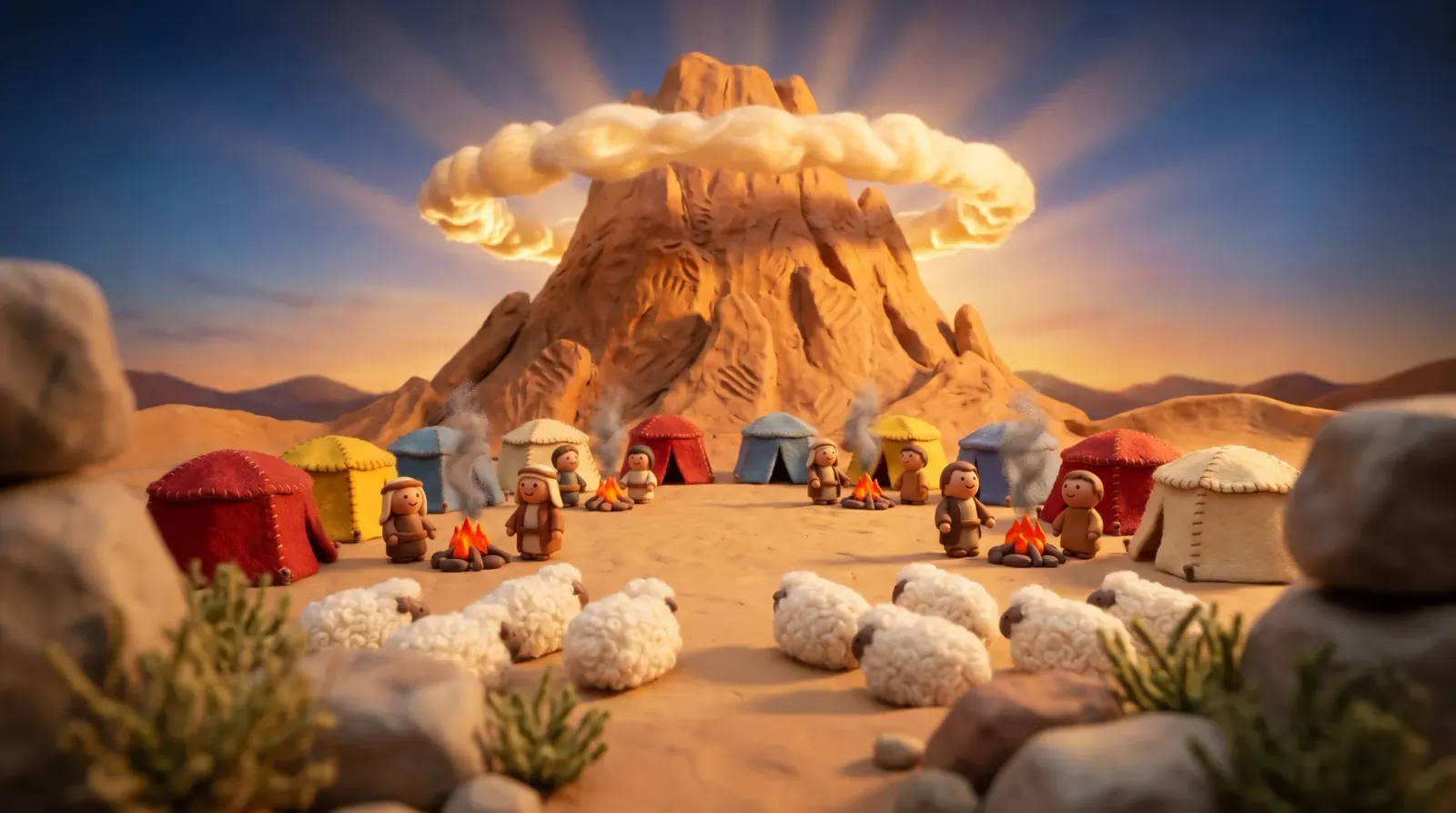 The people camped at the foot of Mount Sinai, with the mountain wrapped in a golden cloud.
How churches number them
Ask a Catholic kid and a Presbyterian kid to name “the second commandment,” and you’ll get two different answers. Both kids are right. Exodus 20 has no numbers in it, so each tradition grouped the verses its own way.
| Tradition | How it divides them |
|---|---|
| Catholic and Lutheran (Augustine) | “No other gods” and the ban on idols form one commandment; coveting is split into two |
| Reformed and Orthodox | “I am the LORD your God” together with “no other gods” is the first; the ban on idols is the second; coveting is a single commandment |
| Jewish | The line “I am the LORD your God, who brought you out of Egypt” counts as the first of the ten sayings |
Britannica’s article on the Ten Commandments lays out these three ways of counting. The Catholic side is in paragraph 2066 of the Catechism, which says the division and numbering have varied over history and follows the one established by St. Augustine, also used in the Lutheran confessions. The Orthodox Churches and Reformed communities follow a division worked out by the Greek Fathers. The Wisconsin Evangelical Lutheran Synod (WELS) walks through all three systems too.
This guide follows the Reformed and Orthodox count: Exodus 20:2-3 is number one, and 20:4-6 is number two. Using another numbering at church? Find each passage in the table to see what number your tradition gives it. Kids usually just need to hear that everyone’s reading the same verses and counting them a little differently.
The Ten Commandments, one by one
1. Love only God
I am the LORD your God, who brought you out of the land of Egypt, out of the house of slavery. You shall have no other gods before Me.
(Exodus 20:2-3, Berean Standard Bible)
Verse 2 is God’s introduction: He’s the LORD who brought His people out of Egypt. Verse 3 asks for first place in their hearts, with no other gods sharing that spot.
Kids understand “first place” right away. Ask yours what would be hardest to give up for a whole week, like a new LEGO set, the family dog or Saturday morning cartoons, and talk about keeping God ahead of even that. Then let them close with a short prayer they make up on the spot.
2. Don’t worship idols
You shall not make for yourself an idol in the form of anything in the heavens above, on the earth below, or in the waters beneath.
(Exodus 20:4, Berean Standard Bible)
An idol is anything people treat as a god. In Moses’ day that meant carved statues of animals, stars and people, and God told Israel to worship Him alone, the Maker of heaven and earth. Churches differ on religious statues and pictures, so that part is worth talking over with your own church.
For a kid, the closest thing to an idol might be whatever runs their mood. If a bad Pokémon trade or a lost playoff game wrecks the whole weekend, ask, “What would it look like to keep that in its place?”
3. Respect God’s name
You shall not take the name of the LORD your God in vain, for the LORD will not leave anyone unpunished who takes His name in vain.
(Exodus 20:7, Berean Standard Bible)
“OMG” is everywhere, from cartoons to group chats, and kids pick it up fast. That’s a good way into this one. Taking God’s name “in vain” means using it carelessly, as a joke or as an exclamation. His name belongs in prayers, in songs and in stories about what He’s done.
Older kids can look up a few of the names the Bible gives God, like Shepherd (Psalm 23:1) and Father (Matthew 6:9), and talk about what each one says about Him.
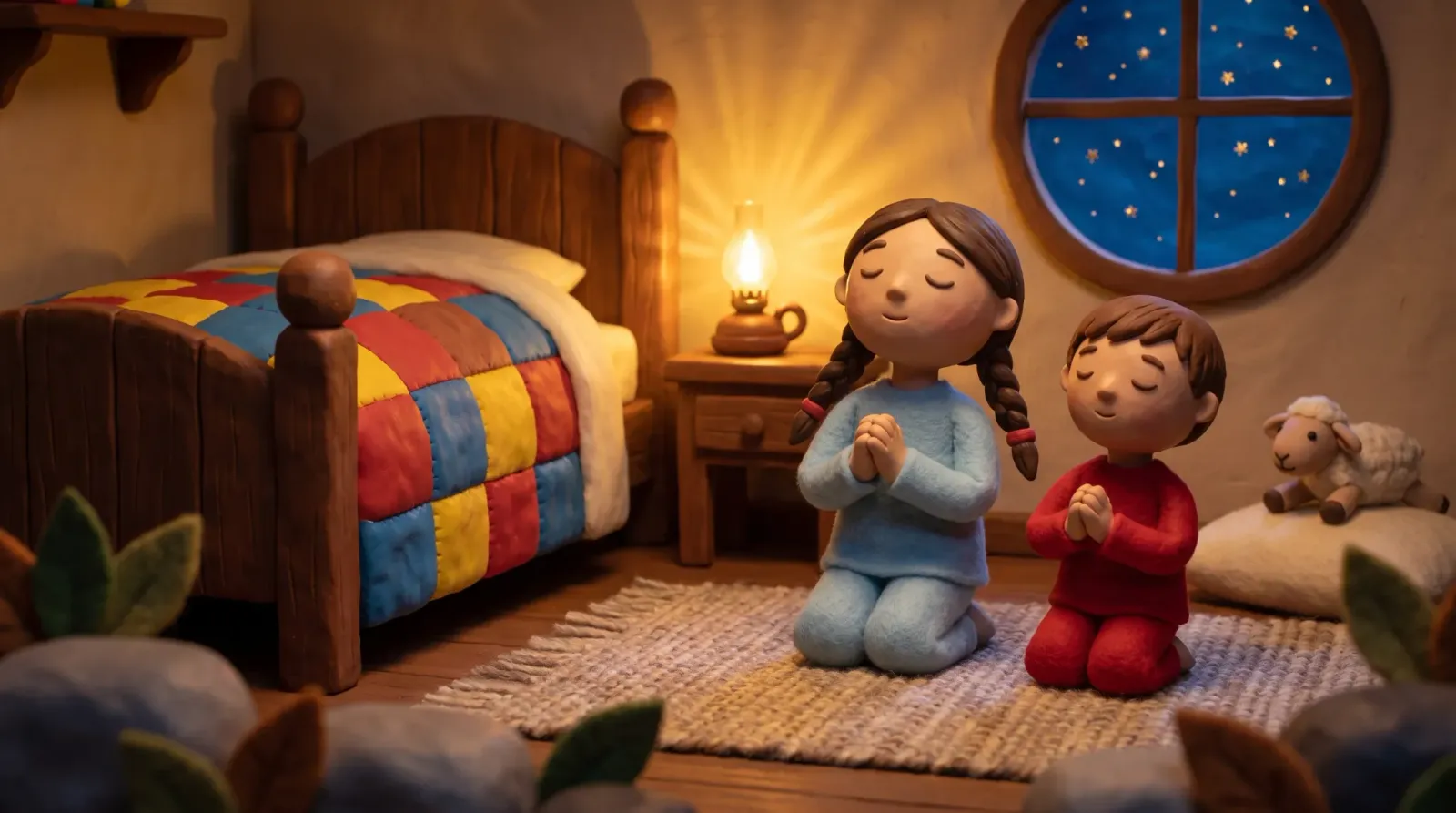 Mia and Leo say thank you to God before bed.
4. Rest and remember God
Remember the Sabbath day by keeping it holy.
(Exodus 20:8, Berean Standard Bible)
Verses 9 through 11 lay out the plan: six days of work, then a Sabbath to the LORD, with rest for the whole household, including kids, servants and even the animals. The reason goes back to creation. The LORD made the heavens and the earth in six days and rested on the seventh (verse 11).
One idea for that day: after church, put your child in charge of the afternoon plan. A picnic, a board game or a batch of cookies all count, as long as nobody has to work. At bedtime, ask which part of the day they’d want to do again next week.
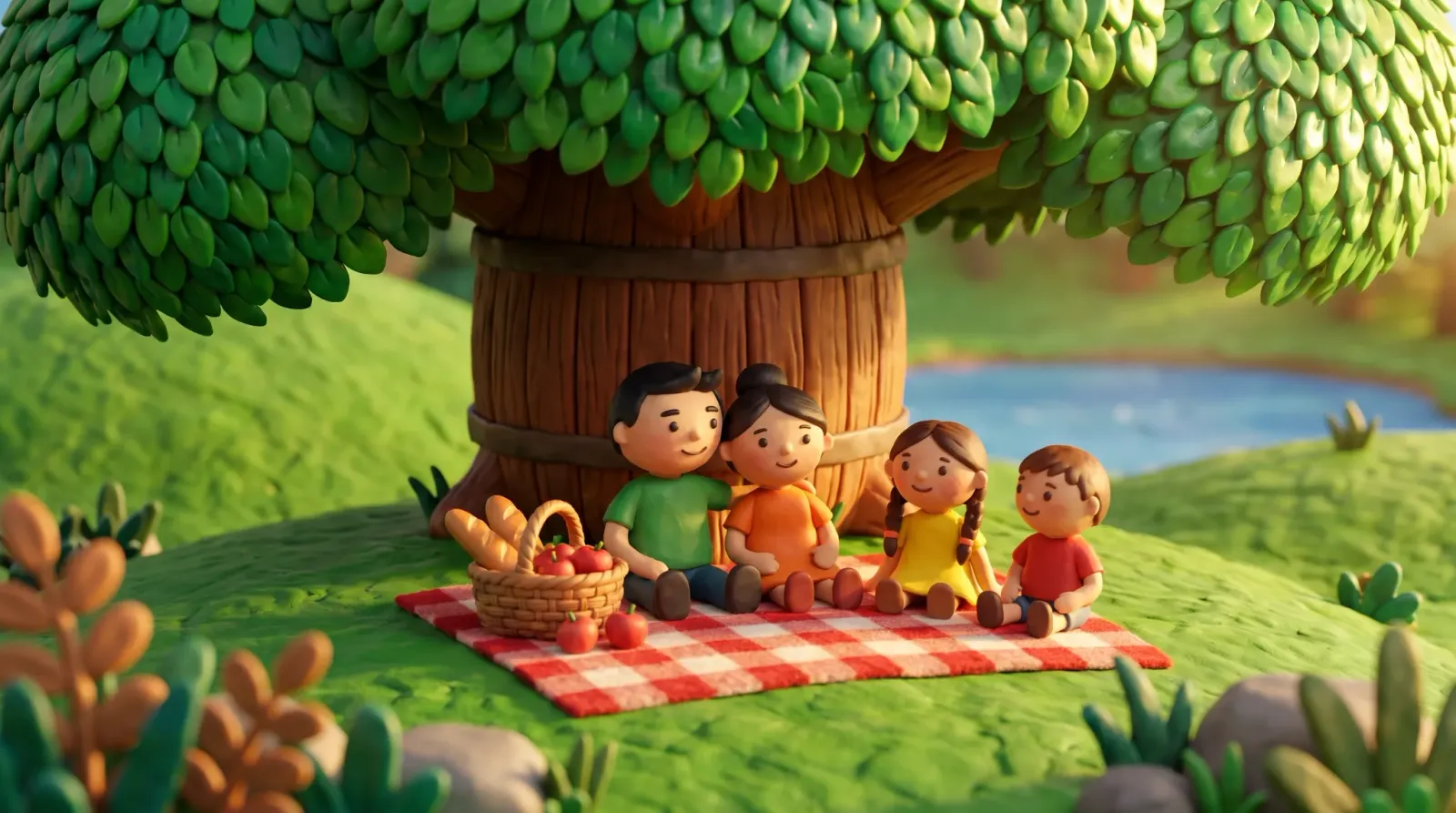 A day of rest: the family picnic in the shade of the tree.
5. Honor your father and mother
Honor your father and mother, so that your days may be long in the land that the LORD your God is giving you.
(Exodus 20:12, Berean Standard Bible)
Paul points out what sets this one apart: “‘Honor your father and mother’ (which is the first commandment with a promise)” (Ephesians 6:2, Berean Standard Bible). The promise is in Exodus 20:12 itself: “that your days may be long.”
For a kid, honor might look like setting the table before anyone asks, writing a thank-you note to Grandpa or putting the tablet down when Dad is talking. If a grandparent, an aunt or another caregiver is raising your child, all of this applies to them too.
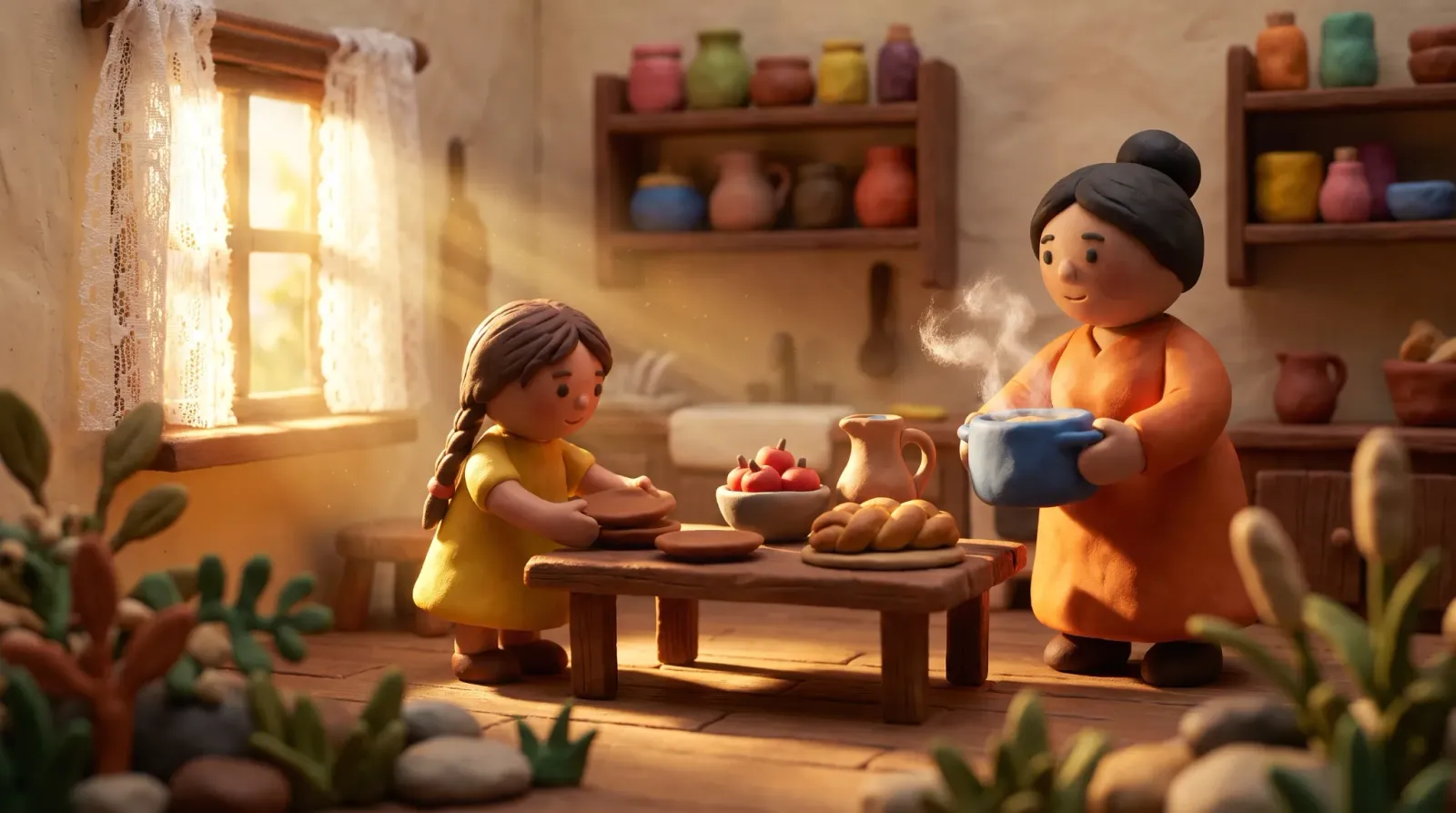 Mia helps her mom set the table for dinner.
6. Protect life
You shall not murder.
(Exodus 20:13, Berean Standard Bible)
This one forbids taking a person’s life. With a preschooler, start from the reason behind it: every person’s life belongs to God. Jesus took the commandment further in Matthew 5:21-22, connecting it to anger and insults, so “I hate you” and name-calling are part of the conversation.
At this age, a lot of it comes down to anger. Help your child make a short list of things to do when they’re about to blow up, like stomping their feet, blowing out five pretend birthday candles or drawing a mad face on scrap paper, and tape it inside their closet door.
7. Be faithful in the family
You shall not commit adultery.
(Exodus 20:14, Berean Standard Bible)
Adultery means breaking the promise of faithfulness a husband and wife make when they marry. If a preschooler asks about the word, that sentence, said calmly, covers it, and the details can wait until they’re older.
Kids can spot faithfulness in the people around them. Point it out when you see it, like grandparents who still hold hands after 50 years of marriage, and ask your child who they know that always keeps their word.
8. Don’t take what belongs to someone else
You shall not steal.
(Exodus 20:15, Berean Standard Bible)
To steal is to take something that belongs to someone else without asking. Halloween makes a perfect test case: is it okay to dig into a sibling’s candy bucket while they’re asleep? What about the trading card that landed in your backpack by accident?
Talk it through, then make the fix concrete. Walk the card back to its owner together the next day.
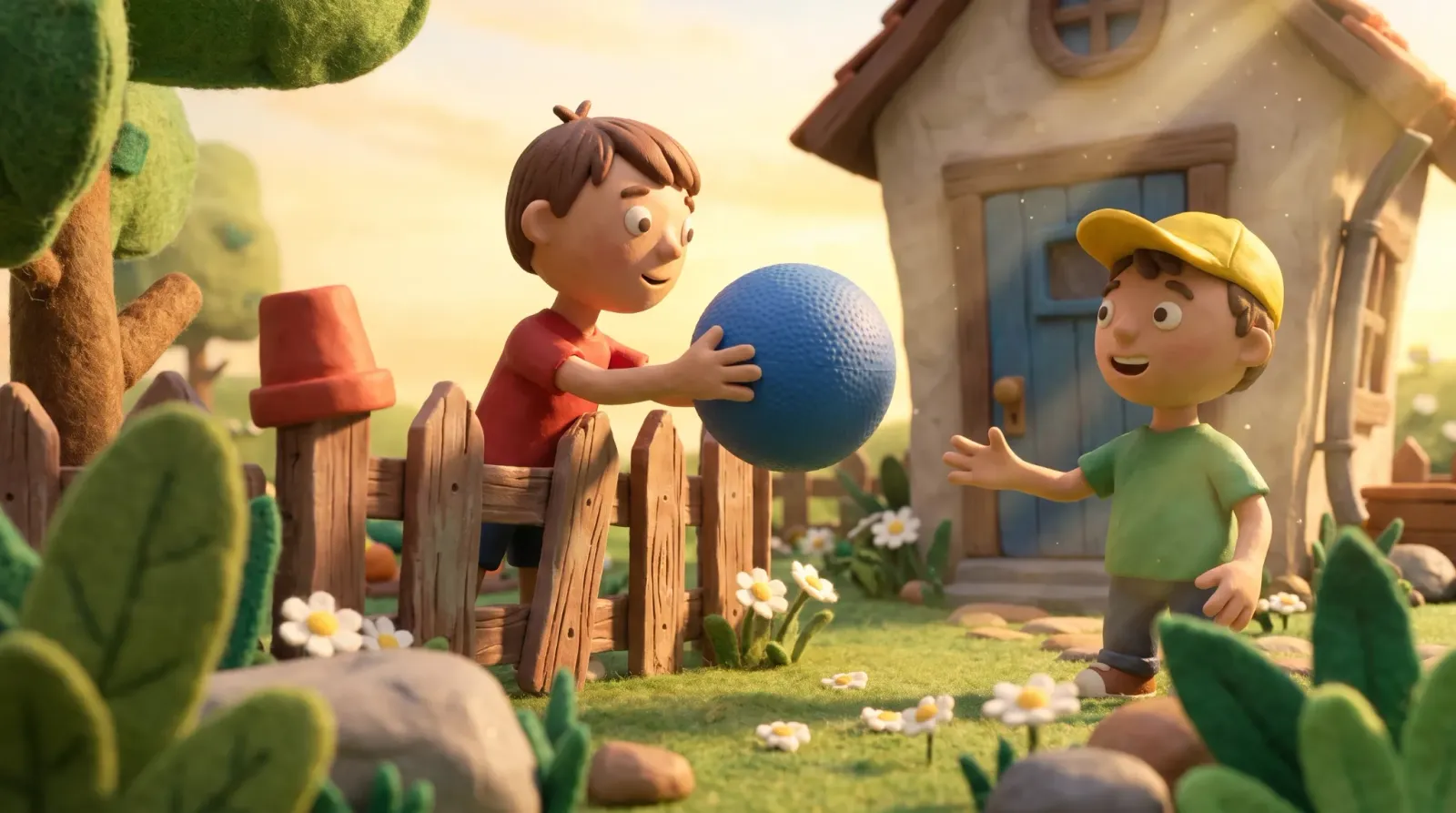 Leo returns the ball his neighbor Sam left in the yard.
9. Tell the truth
You shall not bear false witness against your neighbor.
(Exodus 20:16, Berean Standard Bible)
Kids know this one from the inside. The crayon on the wall, the cookie that disappeared, the sibling about to get blamed for something they didn’t do: each one is a choice about whether to tell it straight. The commandment itself pictures a courtroom, where a witness’s lie could ruin a neighbor, and it reaches rumors and gossip too.
Pick one of those scenes at dinner and ask, “What would telling the truth sound like here?”
10. Be happy with what you have
You shall not covet your neighbor’s house. You shall not covet your neighbor’s wife, or his manservant or maidservant, or his ox or donkey, or anything that belongs to your neighbor.
(Exodus 20:17, Berean Standard Bible)
To covet is to want what belongs to someone else so badly it starts to bother you. The list in Exodus 20:17 covers a neighbor’s house, wife, servants and animals, plus “anything that belongs to your neighbor.” For your child, it might be the pool in the neighbors’ backyard or a friend’s new treehouse.
One way to practice being content: before a birthday or Christmas, let your child pick one of their own toys to give to a kid who doesn’t have many, and talk afterward about how it felt.
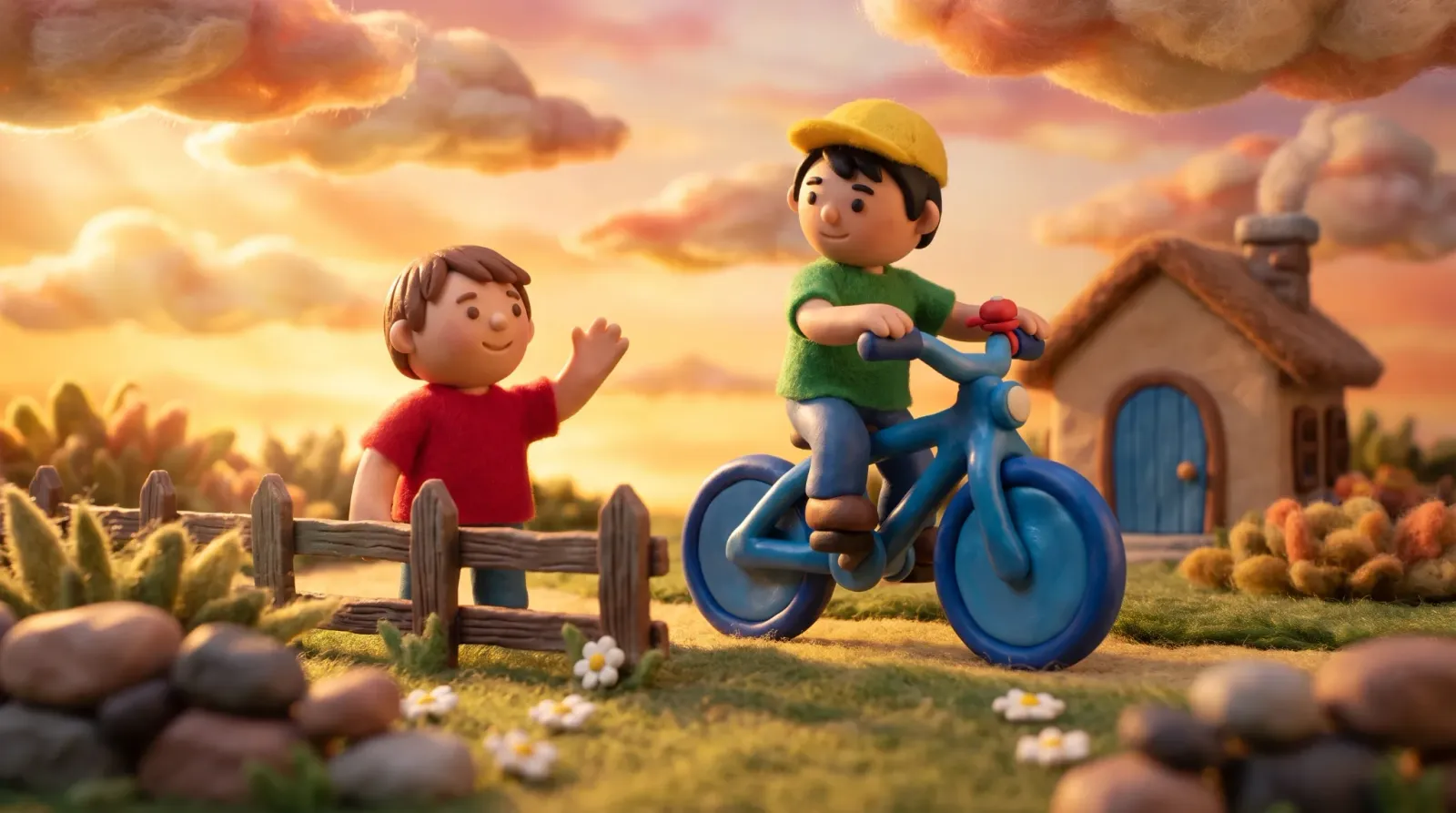 Leo watches neighbor Sam ride his blue bike and is glad for him.
All ten in one table
| No. | In simple words | Where it is |
|---|---|---|
| 1 | Love only God | Exodus 20:2-3 |
| 2 | Don’t worship idols | Exodus 20:4-6 |
| 3 | Respect God’s name | Exodus 20:7 |
| 4 | Rest and remember God | Exodus 20:8-11 |
| 5 | Honor your father and mother | Exodus 20:12 |
| 6 | Protect life | Exodus 20:13 |
| 7 | Be faithful in the family | Exodus 20:14 |
| 8 | Don’t take what’s someone else’s | Exodus 20:15 |
| 9 | Tell the truth | Exodus 20:16 |
| 10 | Be happy with what you have | Exodus 20:17 |
Read down the middle column and you’ll see how the list is built, with God in 1 through 4 and parents, family and neighbors from 5 on. You could tape the table to the fridge and read one row at breakfast.
Exodus 20 and Deuteronomy 5: what’s different
Kids who already know Exodus 20 can open Deuteronomy 5 and look for what changed. Moses repeats the commandments there near the end of Israel’s years in the desert, and most of the words match.
The clearest change is the reason for the Sabbath. Here, Moses ties it to the escape from Egypt:
Remember that you were a slave in the land of Egypt, and that the LORD your God brought you out of there with a mighty hand and an outstretched arm. That is why the LORD your God has commanded you to keep the Sabbath day.
(Deuteronomy 5:15, Berean Standard Bible)
Look closely at the parents commandment too, where Deuteronomy adds “and that it may go well with you in the land” (Deuteronomy 5:16). In the last commandment, the neighbor’s wife comes before his house.
How to teach the commandments at home
Bedtime is a natural slot. Start with a quick quiz on yesterday’s commandment: your child says it without looking, then you check it together in Exodus 20. In Experiment 1 of Roediger and Karpicke’s 2006 study, college students who took a recall test after reading a passage remembered 56% of it a week later, compared with 42% for students who reread it.
Then read tonight’s verse and let your child put it in their own words. Ask where it showed up in their day, at school, at practice or at Grandma’s. For more ways to make the list stick, see how to memorize Bible verses.
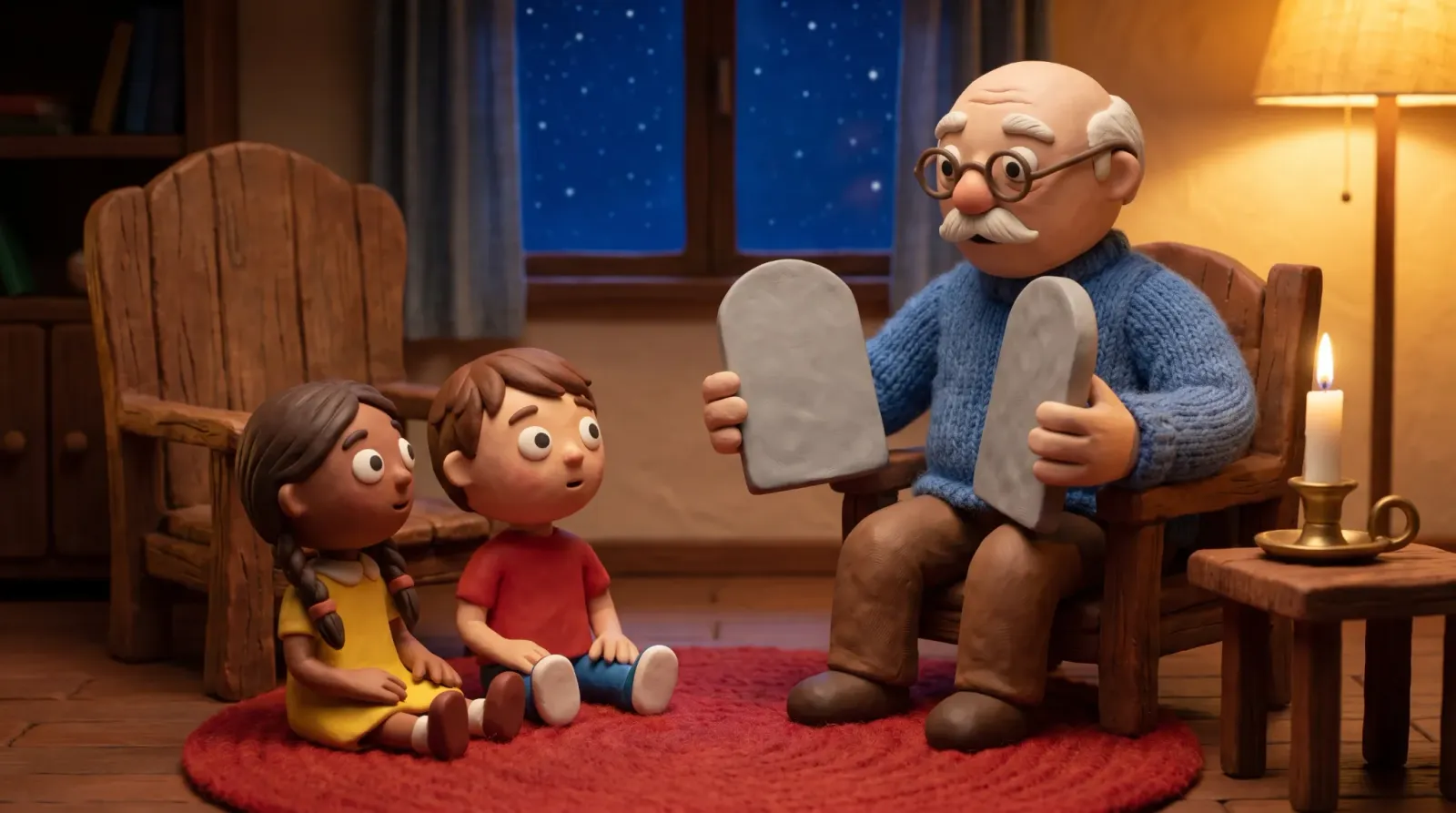 Grandpa Tom shows the stone tablets to Mia and Leo before bed.
For screen time that stays on topic, there’s a Ten Commandments game in our app, Terra Sinai. Each stage covers a passage of Exodus 20, with clay stone tablets on screen and the Bible text shown as you play.
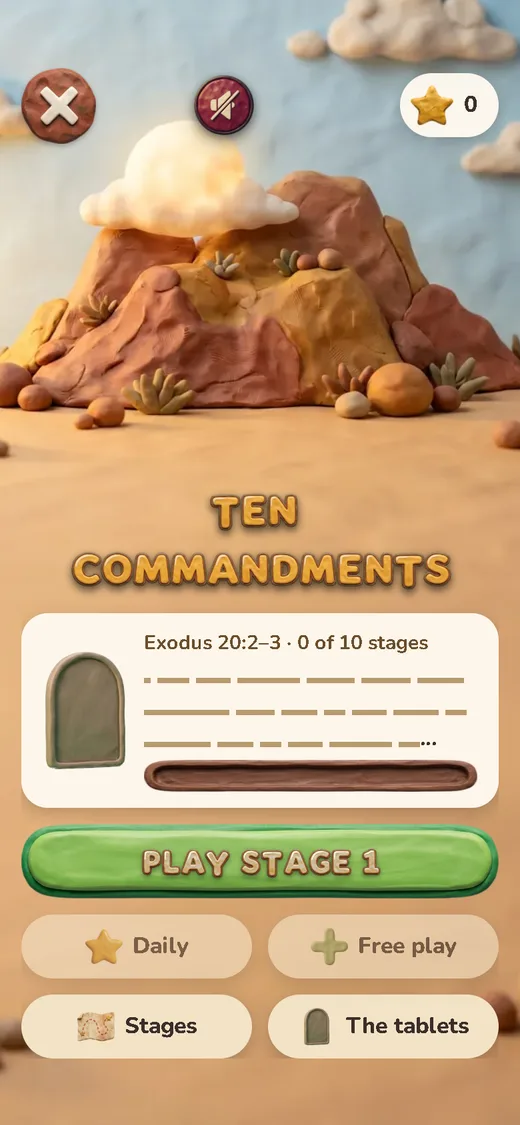 The Ten Commandments game screen, with Mount Sinai in clay.
A padlock marks the stages still waiting for you.
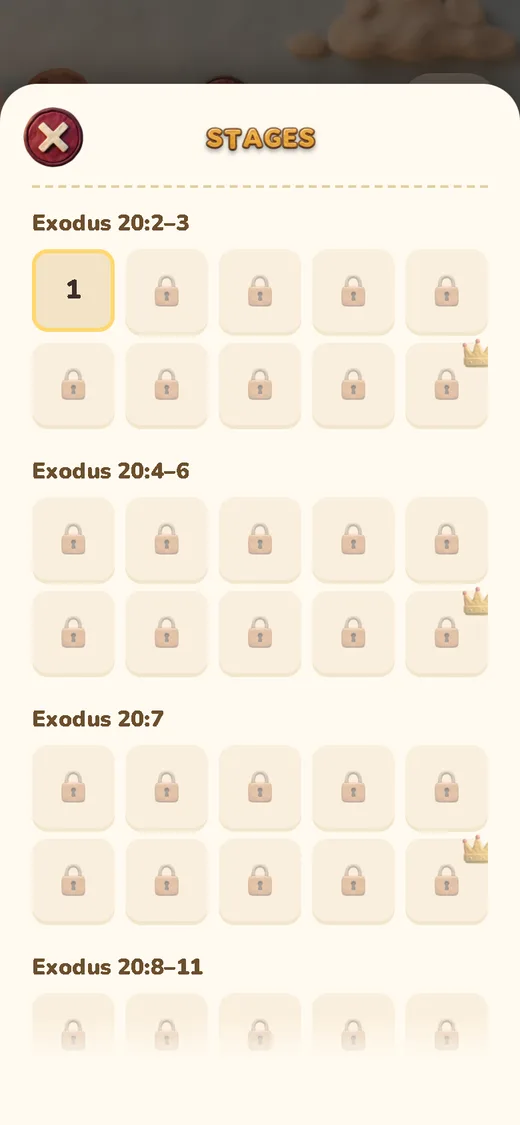 The game’s stages, grouped by passage of Exodus 20.
Want more? Bible verses for kids has short passages to memorize next. For the big picture, read how to teach the Bible to kids. Hands-on families can pick from Bible activities for kids, and Bible games for families covers game night.
How this guide was made. Our editorial team wrote and reviewed this guide in October 2026. All verses come from the Berean Standard Bible (Exodus 20, Deuteronomy 5 and Ephesians 6), and we wrote the kid-level explanations and examples ourselves from those chapters. For the numbering, we relied on the Catechism of the Catholic Church and the pages under Sources. If your church has its own catechism, go with that one at home.
Sources
- Catechism of the Catholic Church, paragraphs 2065 and 2066, vatican.va
- Encyclopaedia Britannica, Ten Commandments, “Numbering” section on the Jewish, Catholic, Lutheran, Reformed and Orthodox traditions
- WELS (Wisconsin Evangelical Lutheran Synod), The numbering of the Ten Commandments
- Roediger, H. L., & Karpicke, J. D. (2006). Test-enhanced learning, Psychological Science 17(3)
- Berean Standard Bible, Exodus 20 and Deuteronomy 5, text from bible.helloao.org
Frequently asked questions
What are the Ten Commandments in simple words for kids?
Love only God. Don't worship idols. Use God's name with respect. Rest and remember God on the Sabbath. Honor your mom and dad. Protect life. Be faithful in the family. Don't take other people's stuff. Tell the truth. Be happy with what you have.
Where are the Ten Commandments in the Bible?
Exodus 20:1-17 has them first, spoken by God at Mount Sinai. Moses goes over them again in Deuteronomy 5:6-21, shortly before Israel crosses into the promised land, and the clearest change there is the reason he gives for the Sabbath: the escape from Egypt.
Why do churches number the Ten Commandments differently?
Because the Bible never numbers them. Ask a Lutheran and a Presbyterian for "the second commandment," and you'll hear "don't misuse God's name" from one and "don't make idols" from the other. The Catechism (paragraph 2066) explains that the Catholic Church, like the Lutheran confessions, follows St. Augustine's division, while Orthodox and Reformed churches use one worked out by the Greek Fathers.
What age can kids start learning the Ten Commandments?
Preschoolers can start around 4 or 5 with the short phrases, one commandment at a time. Once kids read well, they can copy out Exodus 20 and check their memory against it. For adultery, a short, honest sentence is enough until they're older.
How do you explain "you shall not commit adultery" to a child?
One calm sentence usually covers it: "A husband and wife promise to love only each other for the rest of their lives, and this commandment protects that promise." Then pause and let your child lead. Many young kids move on happily after that.
How can I help my child memorize the Ten Commandments?
Quiz them. Before you start a new commandment, ask your child to say the last one without looking, then check it together in Exodus 20. A hand motion for each line helps with the order, and kids who can write can jot a commandment down from memory before checking.
Keep reading
-
Psalm 91 for kids: text and simple meaning
Psalm 91 for kids: the full Berean Standard Bible text, its meaning verse by verse in simple words, a short version to memorize and a calm bedtime routine. Read article -
Fruit of the Spirit for kids: a family guide
Love, joy, peace and the rest of Galatians 5:22-23 in words kids understand, with family moments, games for busy evenings and a four-week verse plan. Read article -
Noah's ark story for kids, scene by scene
Noah's ark for kids in read-aloud scenes from Genesis 6-9, every number checked in the text, questions by age, crafts and how to tell the flood gently. Read article