
Psalm 91 for kids: text and simple meaning
Psalm 91 for kids: the full Berean Standard Bible text, its meaning verse by verse in simple words, a short version to memorize and a calm bedtime routine.
 The Terra Sinai team 11 min read
In this article (9)
Psalm 91 for kids is a psalm about being safe with God, told in pictures a child can hold onto: a hiding place, a mother bird’s wings, angels holding someone’s hands on a rocky path. Here you’ll find all 16 verses from the Berean Standard Bible, a cheat sheet for the old words, a verse-by-verse walk-through in plain language, four lines to memorize and a 10-minute bedtime routine. When the psalm gets to plague, arrows and the terror of the night, there’s a calm way to explain each one.
The full text of Psalm 91
Start by reading it straight through, out loud and unhurried, so your child hears the whole psalm once before you take it apart. The text below is the Berean Standard Bible.
1 He who dwells in the shelter of the Most High will abide in the shadow of the Almighty. 2 I will say to the LORD, “You are my refuge and my fortress, my God, in whom I trust.” 3 Surely He will deliver you from the snare of the fowler, and from the deadly plague. 4 He will cover you with His feathers; under His wings you will find refuge; His faithfulness is a shield and rampart. 5 You will not fear the terror of the night, nor the arrow that flies by day, 6 nor the pestilence that stalks in the darkness, nor the calamity that destroys at noon. 7 Though a thousand may fall at your side, and ten thousand at your right hand, no harm will come near you. 8 You will only see it with your eyes and witness the punishment of the wicked. 9 Because you have made the LORD your dwelling—my refuge, the Most High— 10 no evil will befall you, no plague will approach your tent. 11 For He will command His angels concerning you to guard you in all your ways. 12 They will lift you up in their hands, so that you will not strike your foot against a stone. 13 You will tread on the lion and cobra; you will trample the young lion and serpent. 14 “Because he loves Me, I will deliver him; because he knows My name, I will protect him. 15 When he calls out to Me, I will answer him; I will be with him in trouble. I will deliver him and honor him. 16 With long life I will satisfy him and show him My salvation.”
(Psalm 91:1-16, Berean Standard Bible)
Psalm 91 explained in simple words
Fowler and rampart don’t come up much on the playground, and a few other words in this psalm are just as old. Here’s a cheat sheet for the grown-up doing the reading.
| In the psalm | In kid words |
|---|---|
| Shelter, refuge, fortress | A safe place, like a blanket fort or the arms of someone who takes care of you |
| Most High, Almighty | Names for God that point to how great and powerful He is |
| Snare of the fowler | A trap for birds, hidden along the path |
| Plague, pestilence | A sickness that spreads and makes lots of people ill |
| Terror of the night | The fear that shows up when the lights go out |
| Arrow that flies by day | A danger that comes from far away, by surprise |
| Rampart | A thick protective wall |
| Dwelling, tent | A home, back when families lived in tents |
| Angels | God’s messengers who watch over the road |
Verse by verse, to read with your child
Verses 1 and 2: the shelter
Verse 1 puts us in a safe spot right away: the shelter of the Most High, resting “in the shadow of the Almighty.” Think of the shade under the big oak at the park on a hot July afternoon, the spot everyone heads for after the swings.
Verse 2 switches to talking straight to God: “You are my refuge and my fortress.” If your child has ever built a couch-cushion fort and guarded it from a sibling, they already know what a fortress is for.
To talk about: “If you could build the safest place in the world, what would it look like?” Let them design it out loud, then tell them verse 1 describes God as a place like that.
Verses 3 and 4: the snare and the wings
Hand your child a pot lid and call it a shield. That’s the last line of verse 4: “His faithfulness is a shield and rampart.” A rampart is a thick wall, and God’s faithfulness, the way He keeps His promises, guards us like both.
The rest of verse 4 is softer: “He will cover you with His feathers; under His wings you will find refuge.” Kids who’ve watched a hen at a county fair or a petting zoo know the picture, chicks scooting under her wings until only their feet show. Verse 3, just before it, names what God rescues from: the snare of the fowler, a hidden bird trap, and a deadly plague.
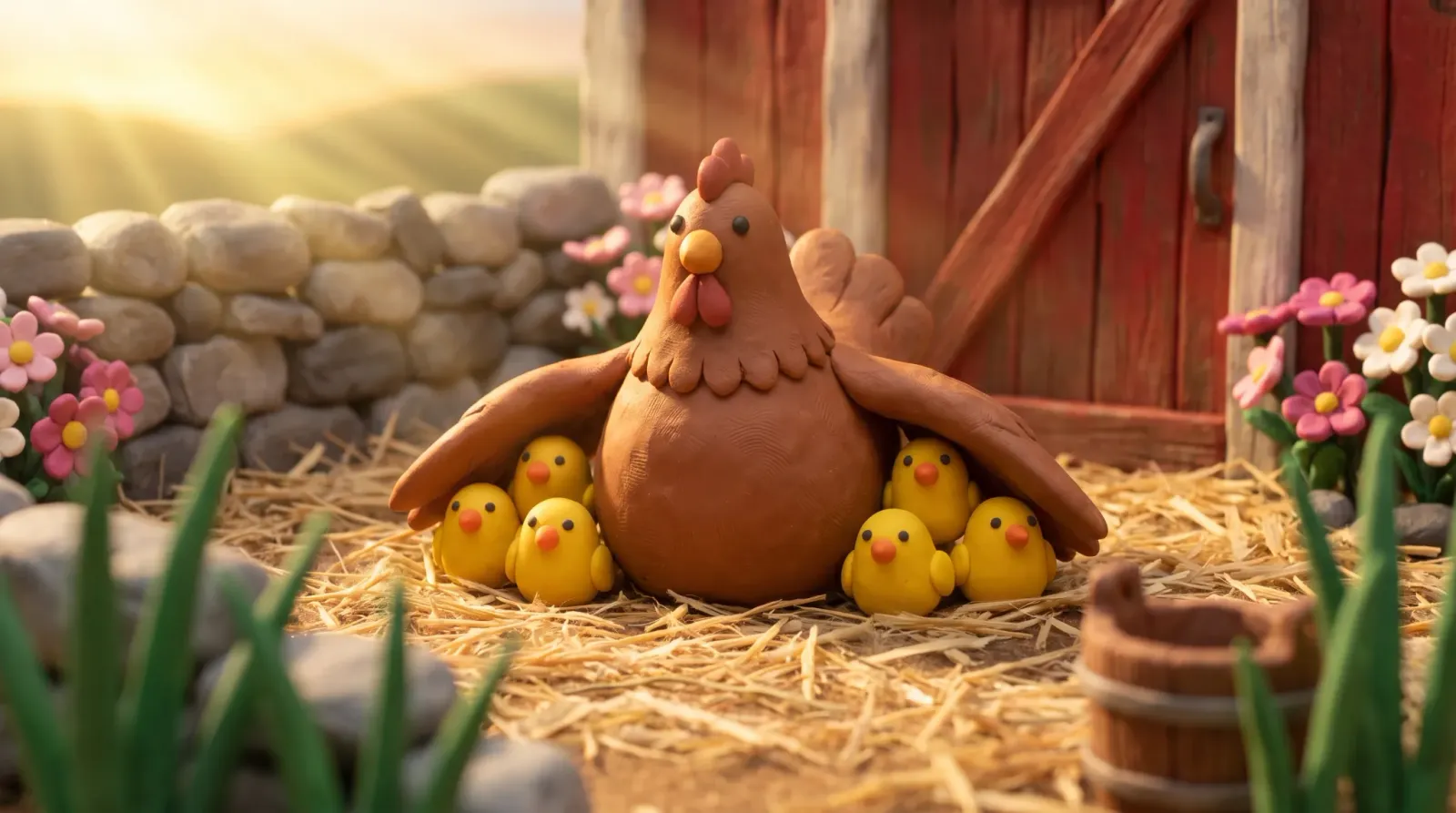 A hen spreads her wings over her chicks, the picture in verse 4.
Verses 5 and 6: night fears and daytime fears
Verse 5 names a fear most kids could describe for you: the terror of the night, that jolt when the bedroom light clicks off. Next to it is the arrow that flies by day, danger that shows up out of nowhere. Verse 6 adds pestilence, which for a preschooler can simply be “a sickness that spreads,” and calamity, a word you can leave alone until they ask.
Between night, day, darkness and noon, the two verses cover the whole clock, with God close at every hour.
To talk about: “What’s one thing that feels scary at night?” Write it on a sticky note together, then tear it up after you pray about it.
Verses 7 and 8: a thousand at your side
When kids hear “a thousand may fall at your side,” the first question is usually “Who fell?” Keep it big-picture: the psalm uses a battle scene to show that God’s protection holds even when danger is everywhere. Verse 8 adds that the wicked will be punished, and for a preschooler, “God is fair” covers it.
Verses 9 and 10: the home
In verse 9, the psalm talks about moving in: “you have made the LORD your dwelling.” The person who trusts God lives in Him the way your family lives in your house. Verse 10 uses the home of that time, a tent, and promises that no plague will come near it.
To talk about: “Who helps keep our home safe?” Let your child make the list, from Grandma to the crossing guard on the corner.
Verses 11 and 12: the angels and the stone
You already do verse 12 every time you grab your child’s hand in a busy parking lot. In the psalm, God commands His angels to guard the person who trusts Him, and they “lift you up in their hands, so that you will not strike your foot against a stone.”
Older kids may like knowing that the devil quoted verses 11 and 12 to Jesus during His temptation (Matthew 4:5-6). That story is a good one for another night.
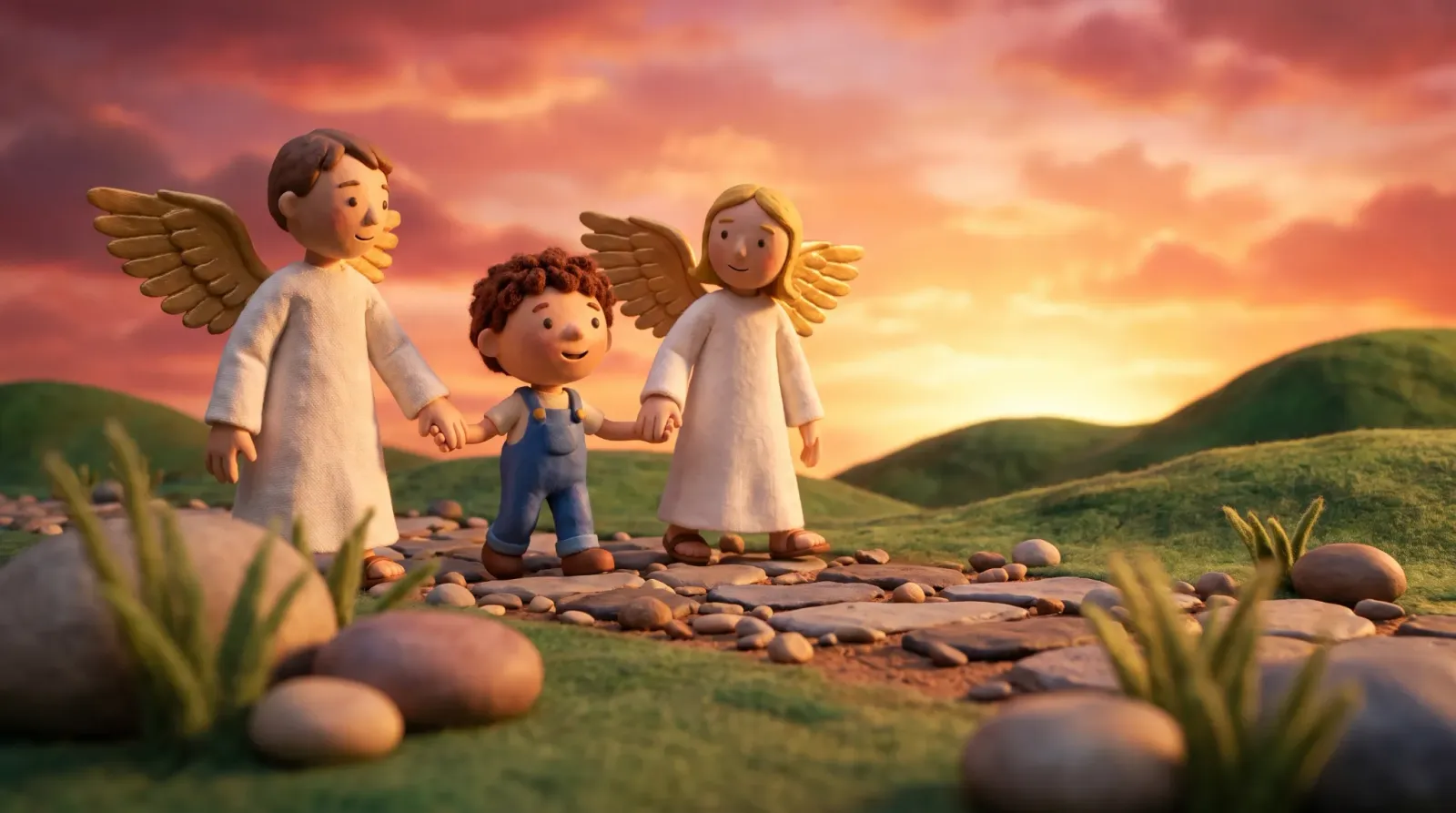 Two angels hold Pedro’s hands on a rocky path, like verse 12.
Verse 13: the lion and the cobra
Kids who love animal documentaries will perk up here. Verse 13 talks about treading on the lion and the cobra, two animals that would scare anyone. Ask your child to show you a brave walk, chin up and steady steps, and tell them the verse is about that kind of courage with God beside them.
Verses 14 to 16: God speaks
Listen for the quotation marks in verse 14. From here to the end, God is the one talking: “Because he loves Me, I will deliver him.” Ask your child, “Who’s talking now?”
Verse 15 is the one to come back to on hard nights: “When he calls out to Me, I will answer him; I will be with him in trouble.” Kids know trouble, like the knot in the stomach before a doctor’s visit or the lonely feeling after a fight with a friend, and here God promises to answer and stay with them through it. Verse 16 closes with long life and “My salvation,” God’s promise to rescue the one who trusts Him.
To talk about: “If you could call God right now, what would you tell Him?”
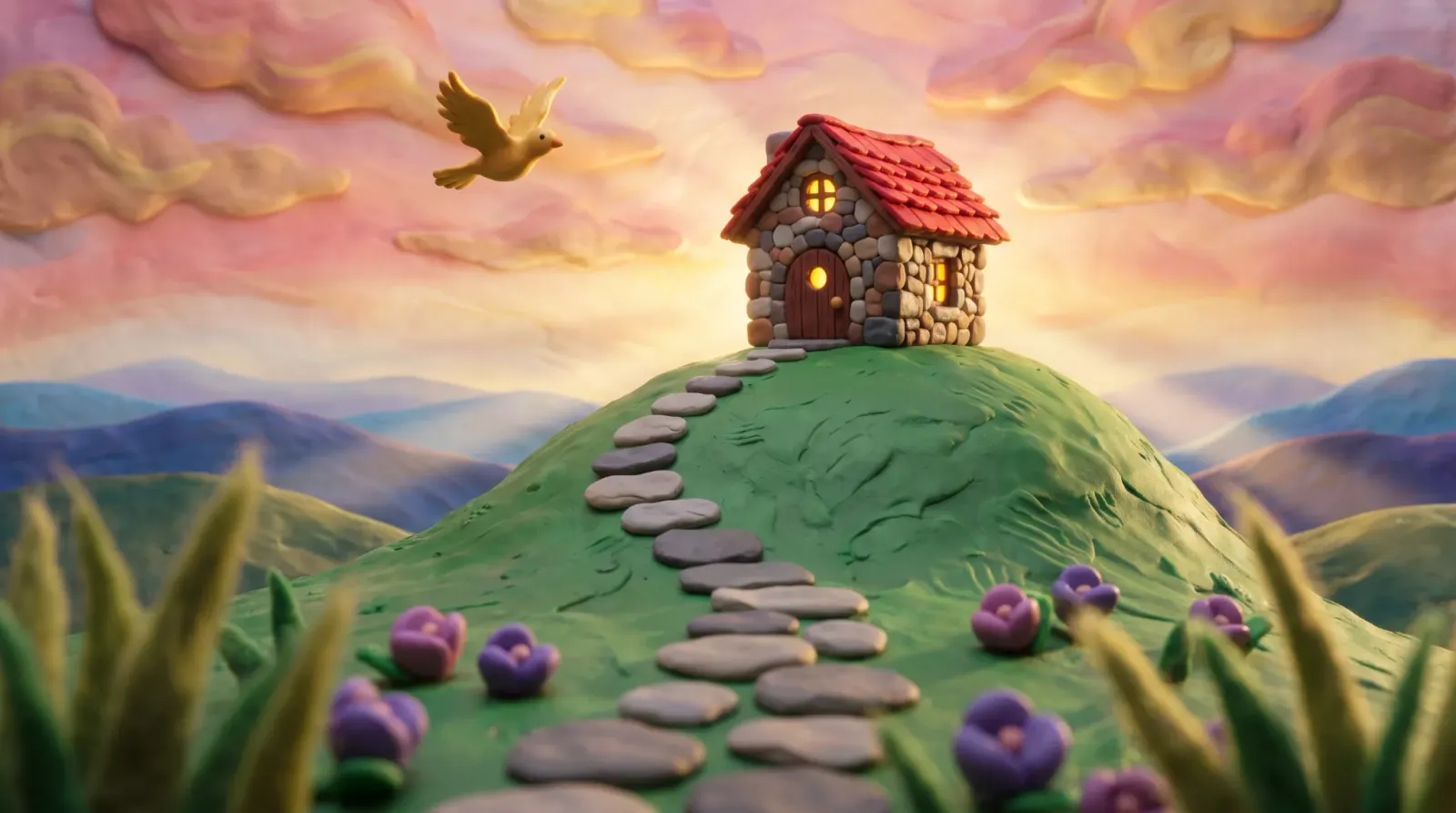 A safe home on a hill at dawn, a picture of God’s protection in verse 14.
What if my child asks whether nothing bad will ever happen?
This question tends to come up after something hard, like a grandparent in the hospital, a scary news story or a pet that died. Your child deserves a true answer, and the psalm gives you one: in verse 15, God promises to be “with him in trouble,” which assumes trouble will come. Joseph’s story points the same way. His brothers sold him, he ended up a slave in Egypt, and Genesis 39:2 says “the LORD was with Joseph” there.
Then make it personal. Tell your child about a hard time your family got through, like a move, a lost job or a long illness, and who showed up to help. Afterward, read verse 15 together again: “I will be with him in trouble.”
It’s fine to pick the conversation back up at breakfast. Bible stories for kids has short retellings about people who trusted God if you want a story to go with it.
A short version to memorize
Each line below is copied word for word from the Berean Standard Bible.
- “You are my refuge and my fortress, my God, in whom I trust.” (verse 2)
- “He will cover you with His feathers; under His wings you will find refuge” (verse 4)
- “For He will command His angels concerning you to guard you in all your ways.” (verse 11)
- “When he calls out to Me, I will answer him; I will be with him in trouble.” (verse 15)
Add one line a night. By the fourth night your child has the whole short version, and on the fifth you can say it together without peeking. Make it call-and-response if your kid likes games: you say the verse number, they say the line.
Toddlers can start with a version in our own words: “God is my shelter. He covers me with His wings, sends angels to watch over me and is always with me.” For more memory techniques, see how to memorize Bible verses and Bible verses for kids.
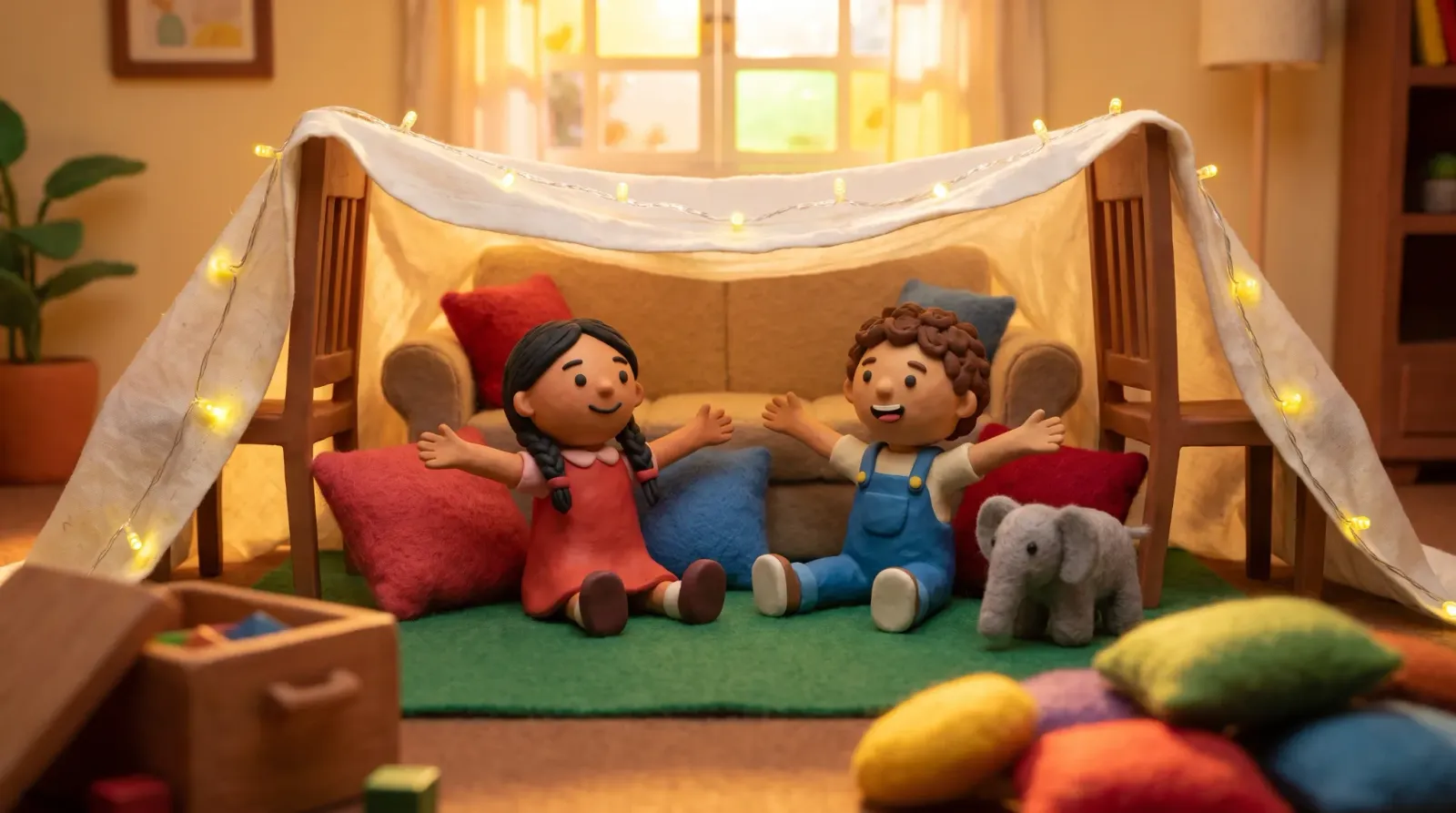 Lia and Pedro spread their arms like wings inside a bedsheet fort.
Psalm 91 at bedtime
Clear out the screens first. The CDC’s page for 5-year-olds recommends no screens for 1 to 2 hours before bed, and the AAP suggests setting aside 10 to 20 minutes for books, TV off, as part of the routine. A few psalm verses fit easily in that window. One line of Psalm 91 can also last you all week, since the AAP notes that toddlers love hearing the same book over and over.
Psalm 91 suits bedtime. It names the terror of the night head-on, and verse 1 pictures someone resting “in the shadow of the Almighty.” Read verses 1, 4 and 11 with the lights low, or try this 10-minute routine tonight:
- Get your child tucked in, turn the lights down and take three slow breaths together.
- Read verses 1 and 4, or tonight’s line from the short version.
- Ask who takes care of them and where they feel safe.
- Say the line from verse 4 together and flap your “wings.”
- Close with a one-sentence prayer (“God, thank You for taking care of us tonight. Amen.”) and your usual good night.
For a kid who’s scared of the dark, start with the lamp on and let them tell you what the dark feels like. Then say verse 1 together before you switch it off. On rough weeks, that one verse can be the whole routine.
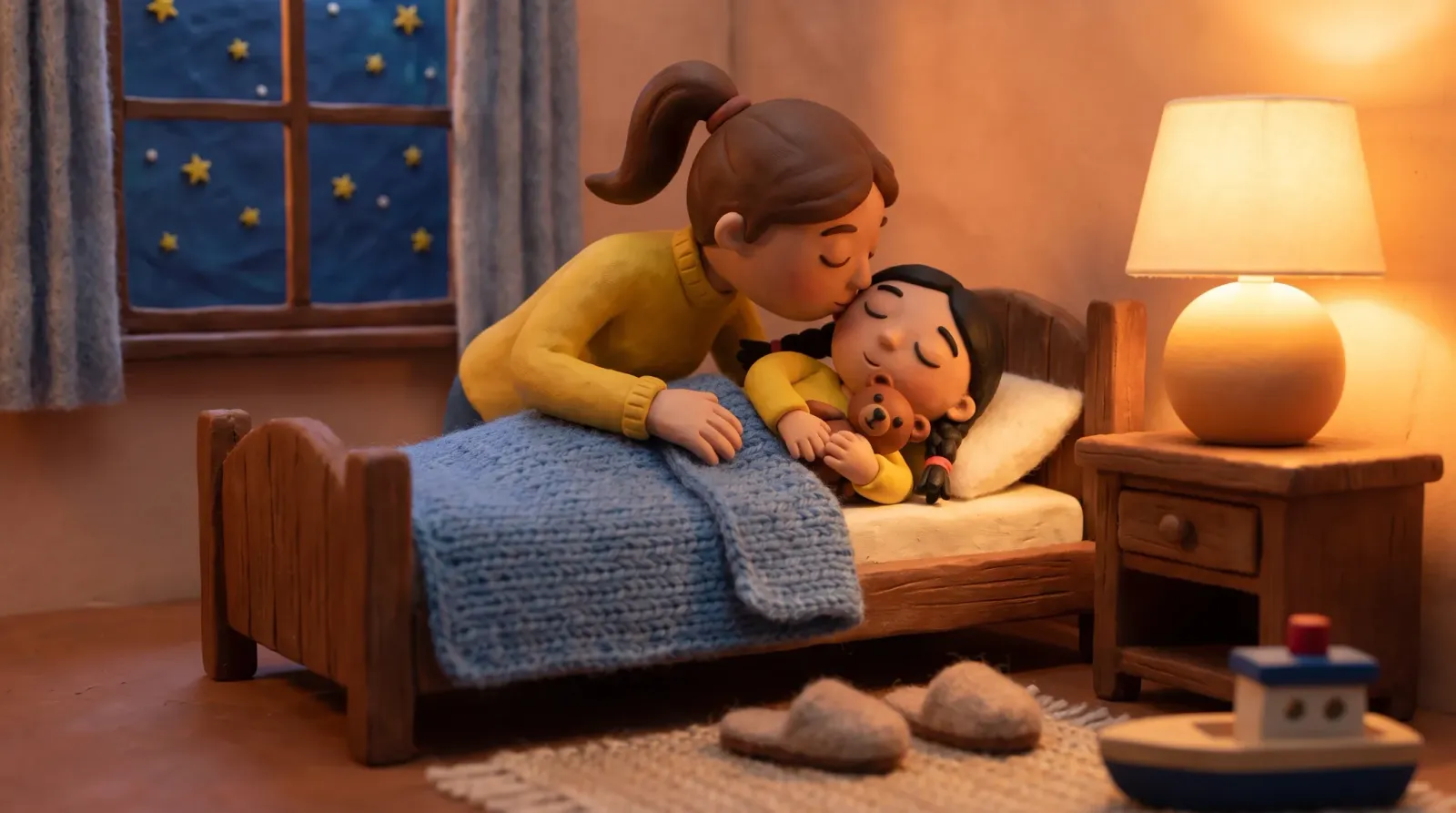 Mara sits by Lia’s bed, the lamp on low, as Lia sleeps with her teddy bear.
On nights when your own voice is tired, our app, Terra Sinai, can read the psalm aloud. Its narrated Bible has a Timer button that stops playback after a few minutes, and the audio needs an internet connection.
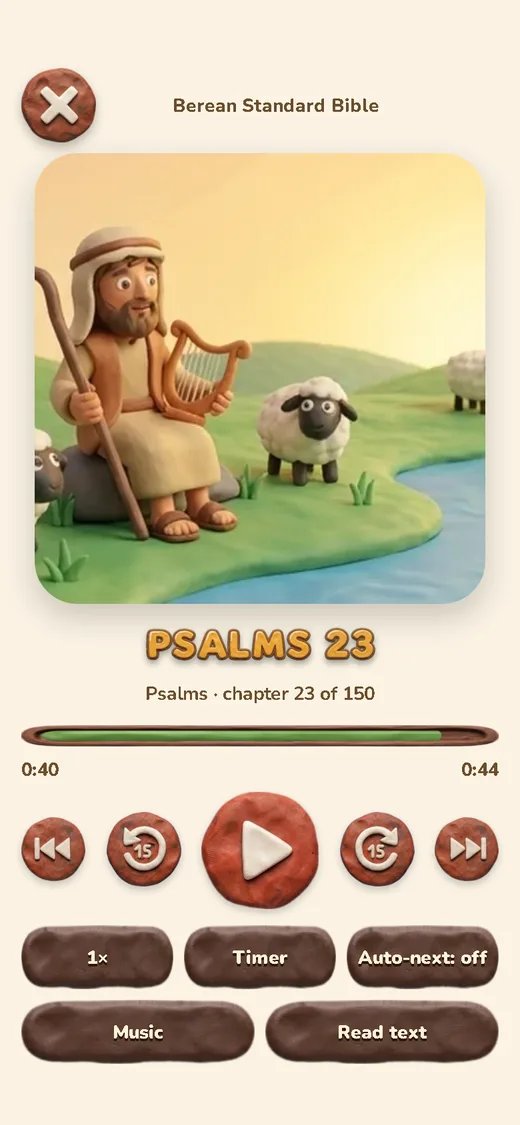 The Bible audio player, with the Timer for bedtime.
Ideas to try as a family
Get out the crayons and have everyone draw verse 4: a pair of huge wings with whatever they’d want tucked underneath, like family, pets or the house. Another day, build the shelter from verse 1 for real: drape a sheet over two chairs, crawl in with a flashlight and read the first four verses inside your fort.
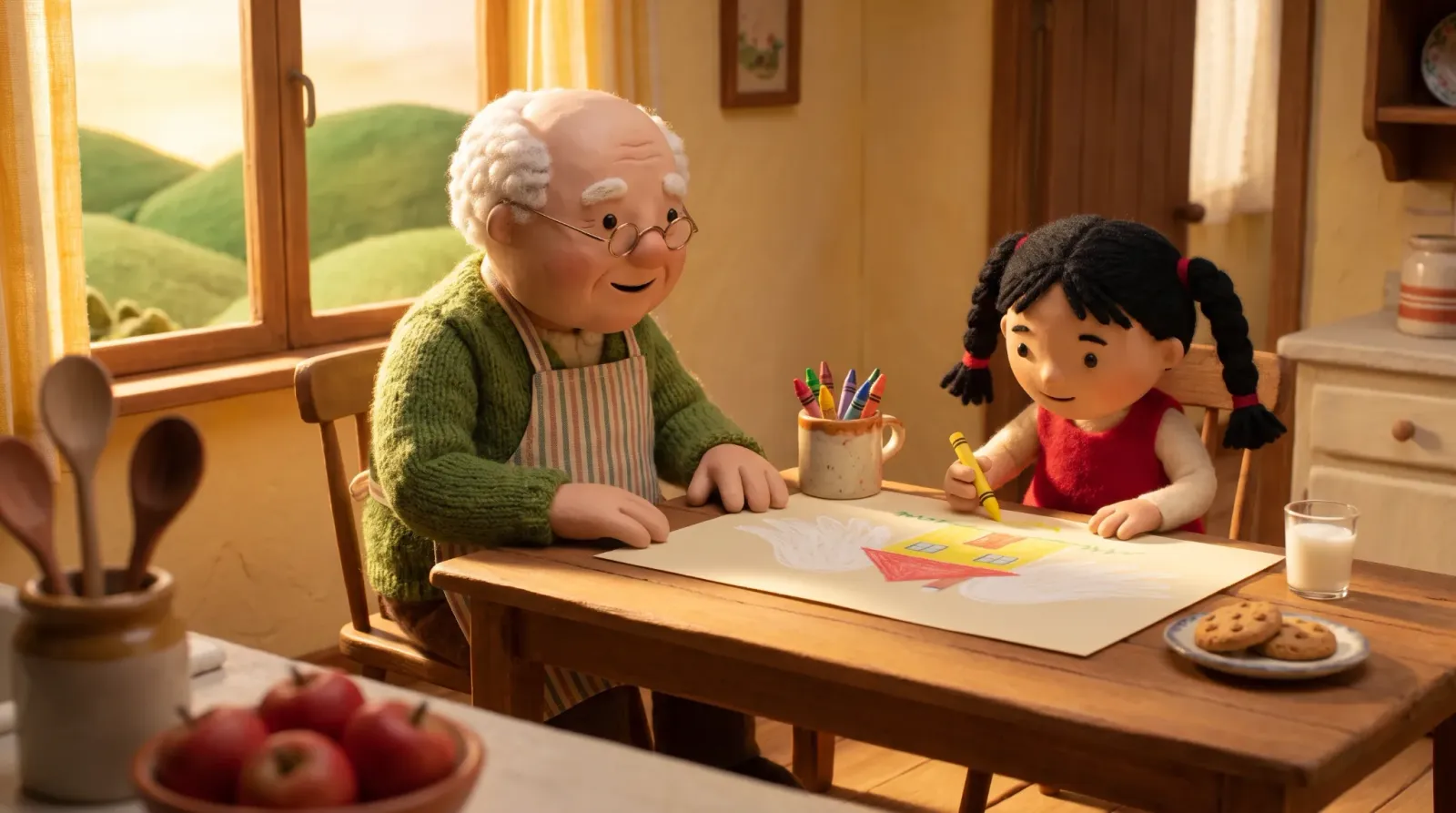 Lia draws a little yellow house under two big wings while Grandpa Tito watches.
You’ll find more ideas in Bible activities for kids and the audio Bible.
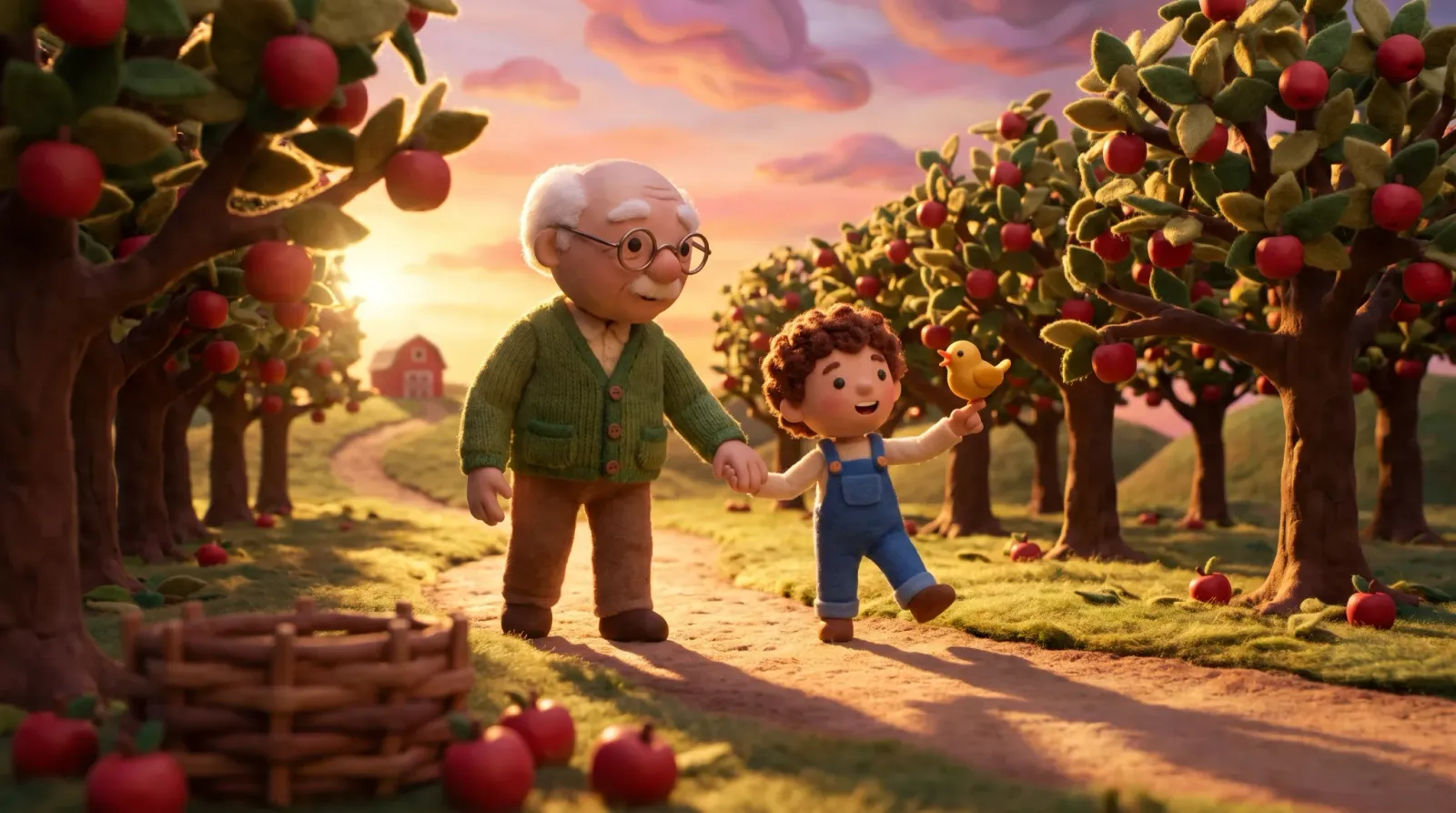 Grandpa Tito and Pedro take an evening walk through the orchard.
How this guide was made. Our editorial team, which isn’t tied to any one church, wrote this guide and reviewed it in October 2026. Psalm 91 is quoted from the Berean Standard Bible, and we wrote the kid-friendly explanations ourselves from the psalm. The sleep and reading tips come from the AAP and the CDC. If your child’s sleep or fears worry you, check in with your pediatrician.
Sources
- Berean Standard Bible, Psalm 91, via the Free Use Bible API
- American Academy of Pediatrics, Toddler Won’t Go to Sleep? 7 Tips to Help End Bedtime Battles, HealthyChildren.org
- American Academy of Pediatrics, How to Share Books with Children 2 and 3 Years Old, HealthyChildren.org
- CDC, Milestones by 5 Years
Frequently asked questions
Is Psalm 91 okay for kids?
Yes, especially if you read it a few verses at a time and explain the hard words as you go. From start to finish it's about shelter, and most of its pictures, like wings, a fortress and angels on the road, are comforting. For plague, the terror of the night and the arrow, try "sickness," "being scared of the dark" and "danger from far away."
What age can I start reading Psalm 91 with my child?
There's no set age. Preschoolers can pick up short lines from verses 1, 2, 4 and 11 just by hearing them again and again. We'd wait on the whole psalm, with explanations, until about 6, when kids start asking questions about everything they hear.
What does "terror of the night" mean in Psalm 91?
It's the kind of fear that shows up after dark: a strange noise, a shadow on the wall, a heart that won't slow down. Verse 5 promises, "You will not fear the terror of the night." It's one short sentence, so many kids can learn it in a night or two.
Does Psalm 91 promise that nothing bad will happen to my child?
Psalm 91 is a poem of trust, and verse 15 has God promising to be "with him in trouble," so trouble is part of the picture. Joseph's story makes the same point: Genesis 39:2 says the LORD was with him as a slave in Egypt. With your child, be honest that sad days come, and remind them who stays close.
How do I use Psalm 91 at bedtime?
Pick two or three verses (1, 4 and 11 are a good set) and read them with the lamp low after screens are off. Ask one question, like "Where do you feel safe?", and finish with a one-sentence prayer. The AAP suggests setting aside 10 to 20 minutes for books in the bedtime routine, with the TV off.
Keep reading
-
Ten Commandments for kids, one by one
The Ten Commandments for kids from Exodus 20: the Bible text, what each one means in simple words, an everyday example, and how churches number them. Read article -
Fruit of the Spirit for kids: a family guide
Love, joy, peace and the rest of Galatians 5:22-23 in words kids understand, with family moments, games for busy evenings and a four-week verse plan. Read article -
Noah's ark story for kids, scene by scene
Noah's ark for kids in read-aloud scenes from Genesis 6-9, every number checked in the text, questions by age, crafts and how to tell the flood gently. Read article