
Bible verses for kids: 20 short, easy picks
20 short Bible verses for kids to memorize, by theme (courage, fear, friendship, thankfulness, obedience, God's love), with ages and a motion for each.
 The Terra Sinai team 11 min read
In this article (7)
Start with a short verse about something your child is going through right now, like a scary night, a new friend or a reason to say thanks, and practice it with a hand motion for 3 to 5 minutes a day over one week. Most of the 20 short Bible verses for kids below have 15 words or fewer. They’re grouped into six themes, each with the age where it usually clicks and a move or game to practice with, and every one is quoted from the Berean Standard Bible (BSB). If your family memorizes in the King James Version, a table further down shows how the length changes for a few of them.
The idea of storing up God’s Word goes back to the Psalms:
“I have hidden Your word in my heart that I might not sin against You.” (Psalm 119:11, Berean Standard Bible)
This page is the list itself. For the full memorization method, with a 7-day plan, see how to memorize Bible verses. For a long-term plan that covers whole chapters and books, see how to memorize the Bible.
How we picked the 20 verses
A verse made the cut if a kid can say it in one breath (one or two short clauses), if any tricky word can be explained over breakfast in a sentence, and if it makes sense without reading the verse before it. Each table shows the word count, the age we suggest and a move to go with it.
Ephesians 4:32 (“Be kind and tenderhearted to one another…”) stands on its own in the BSB and makes a good next pick once your child knows a few verses. John 3:16 has 27 words in the BSB and talks about eternal life, a topic to talk through with older kids. Joshua 1:9 is on the list, and in the BSB it opens with a question (“Have I not commanded you to be strong and courageous?”). Younger kids may need a quick explanation of who’s asking. Psalm titles like “A Psalm of David.” aren’t included in the text or the word counts.
How to read the age column
No study set these ages; they’re our own call, and they assume a grown-up is practicing alongside. They track each verse’s word count in the BSB and move up a year or two when a word like “adversity” (Proverbs 17:17) shows up. For a baseline, we looked at the CDC’s language milestones: by age 3, most children can hold a conversation with at least two back-and-forth exchanges and can be understood most of the time; by age 4 they say sentences of four or more words and say some words from a song, story or nursery rhyme (CDC, age 3; CDC, age 4).
| Age | Verse length | What to expect |
|---|---|---|
| 3 to 4 | A phrase of 4 to 6 words | The child repeats after the grown-up, with a motion |
| 5 to 6 | Up to 10 words | Says the verse, with help starting each phrase |
| 7 to 8 | Up to 15 words | Says it alone and remembers the reference |
| 9 to 12 | Up to 25 words | Writes it from memory and explains it in their own words; Joshua 1:9, at 29 words, goes one phrase a day |
A strong reader can try verses from the next row.
If your church memorizes in the KJV
If your church or Sunday school memorizes in the King James, here’s how a few verses compare. We counted the words in both translations:
| Verse | Berean Standard Bible | King James Version |
|---|---|---|
| Psalm 56:3 | 10 words | 10 words |
| 1 John 4:19 | 7 words | 8 words |
| John 14:15 | 9 words | 7 words |
| 1 Corinthians 16:13 | 15 words | 13 words |
| Joshua 1:9 | 29 words | 30 words |
The counts stay close. The KJV wording is older, as in “What time I am afraid, I will trust in thee” (Psalm 56:3) or “Watch ye, stand fast in the faith, quit you like men, be strong” (1 Corinthians 16:13). Words like “thee,” “ye” and “quit you like men” need a one-line explanation for a young child. If you use a different Bible at home, count the words in your verse before you start and adjust the age.
The 20 Bible verses for kids, by theme
Scared of storms this week? Fighting with a sibling? Jump straight to that theme. Each one has its own table with the text, word count, age and a move.
Verses about courage
Tryouts on Saturday, or a first sleepover at a friend’s house? Philippians 4:13 and Psalm 31:24 are 11 words each and 1 Corinthians 16:13 is 15, so a 7-year-old can say any of them alone. Joshua 1:9 needs a few days of practice.
| Verse | Text (Berean Standard Bible) | Words | Age | Move or game |
|---|---|---|---|---|
| Philippians 4:13 | I can do all things through Christ who gives me strength. | 11 | 7+ | Bend your arm and show a “muscle” on “gives me strength”; on “Christ,” raise both hands. |
| Psalm 31:24 | Be strong and courageous, all you who hope in the LORD. | 11 | 7+ | March in place and stomp on “strong”; put a hand on your chest on “hope.” |
| 1 Corinthians 16:13 | Be on the alert. Stand firm in the faith. Be men of courage. Be strong. | 15 | 7+ | Hand over the eyes (alert), feet planted wide (stand firm), chest out (courage), fists up (strong). |
| Joshua 1:9 | Have I not commanded you to be strong and courageous? Do not be afraid; do not be discouraged, for the LORD your God is with you wherever you go. | 29 | 10+ | Each phrase is a step forward, four in all; on “wherever you go,” turn and point at the horizon. |
Joshua 1:9 is the long one at 29 words, so break it into four phrases and add one a day; by Thursday your child can string them together. For Philippians 4:13, have them flex a “muscle” on “gives me strength.” Psalm 31:24 is a good one to march to down the hallway. And when you get to “Be men of courage” in 1 Corinthians 16:13, tell your daughter it’s written for her too; the BSB keeps the older wording.
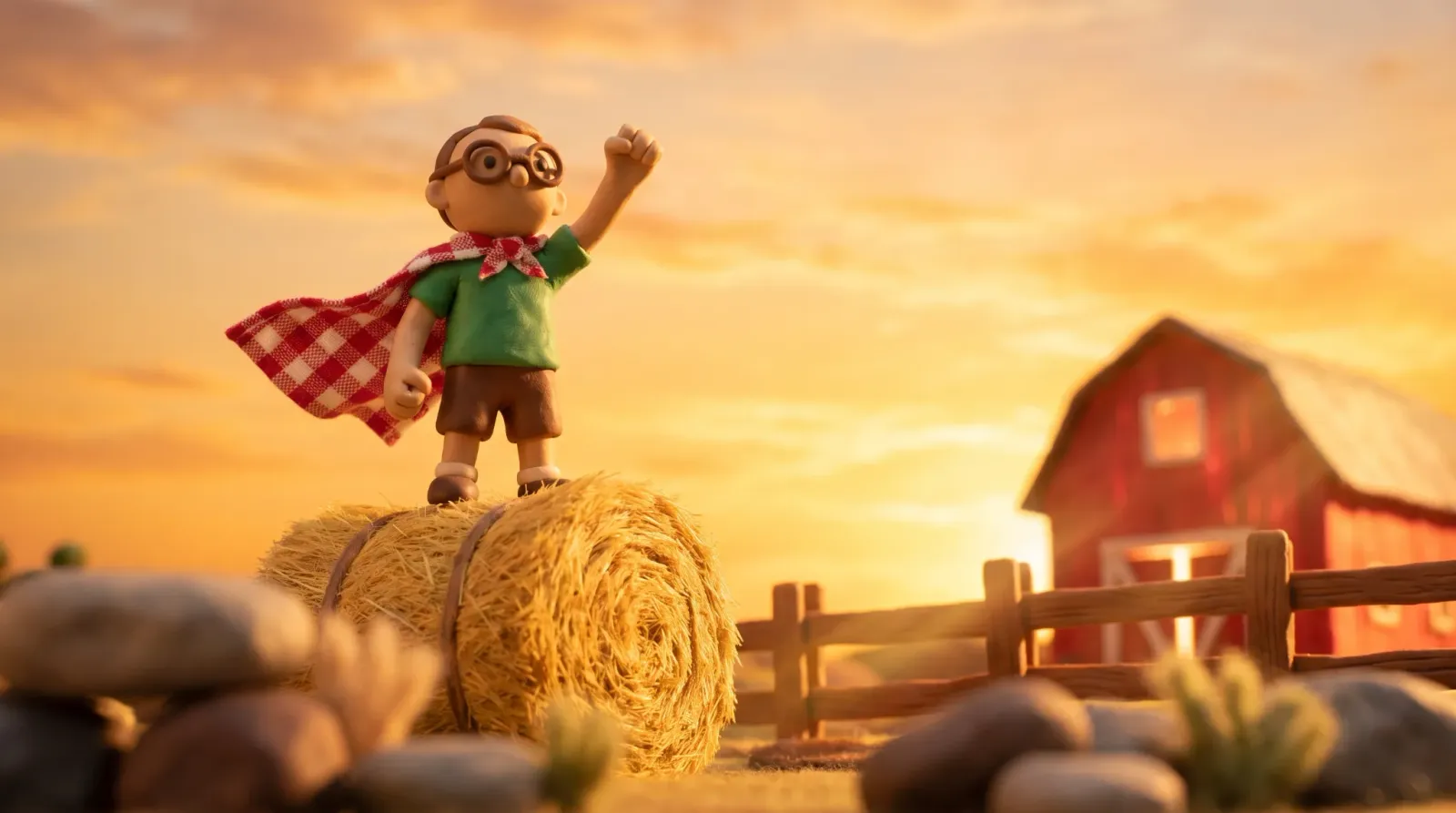 A dish-towel cape and a flexed arm: Tomas is ready for “gives me strength.”
Verses about fear
Psalm 56:3 is the shortest here at 10 words, so start younger kids on it; the other two run 15 and 17. Practice whichever you pick in the afternoon, while everyone’s calm, so it’s ready when thunder rolls in at 2 a.m. or the lights go out.
| Verse | Text (Berean Standard Bible) | Words | Age | Move or game |
|---|---|---|---|---|
| Psalm 56:3 | When I am afraid, I put my trust in You. | 10 | 5+ | Hug your own shoulders on “afraid” and open your arms upward on “I put my trust in You.” |
| Psalm 118:6 | The LORD is on my side; I will not be afraid. What can man do to me? | 17 | 9+ | Hold hands on “on my side”; on the last question, shrug with palms open. |
| Psalm 34:4 | I sought the LORD, and He answered me; He delivered me from all my fears. | 15 | 7+ | Cup a hand behind your ear on “answered me”; on “all my fears,” sweep both hands through the air as if clearing clouds. |
Psalm 56:3 says the scary part out loud before it gives the answer. Thunderstorm in the forecast? Practice it that afternoon with the shoulder hug and the open arms, and you’ll both have it ready when the first boom hits.
For Psalm 34:4, turn it into a call and response: you say “I sought the LORD,” your child cups a hand to their ear and answers “and He answered me,” and you finish the verse together with the big sweep of the arms. On Psalm 118:6, let your child ask “What can man do to me?” in their bravest superhero voice.
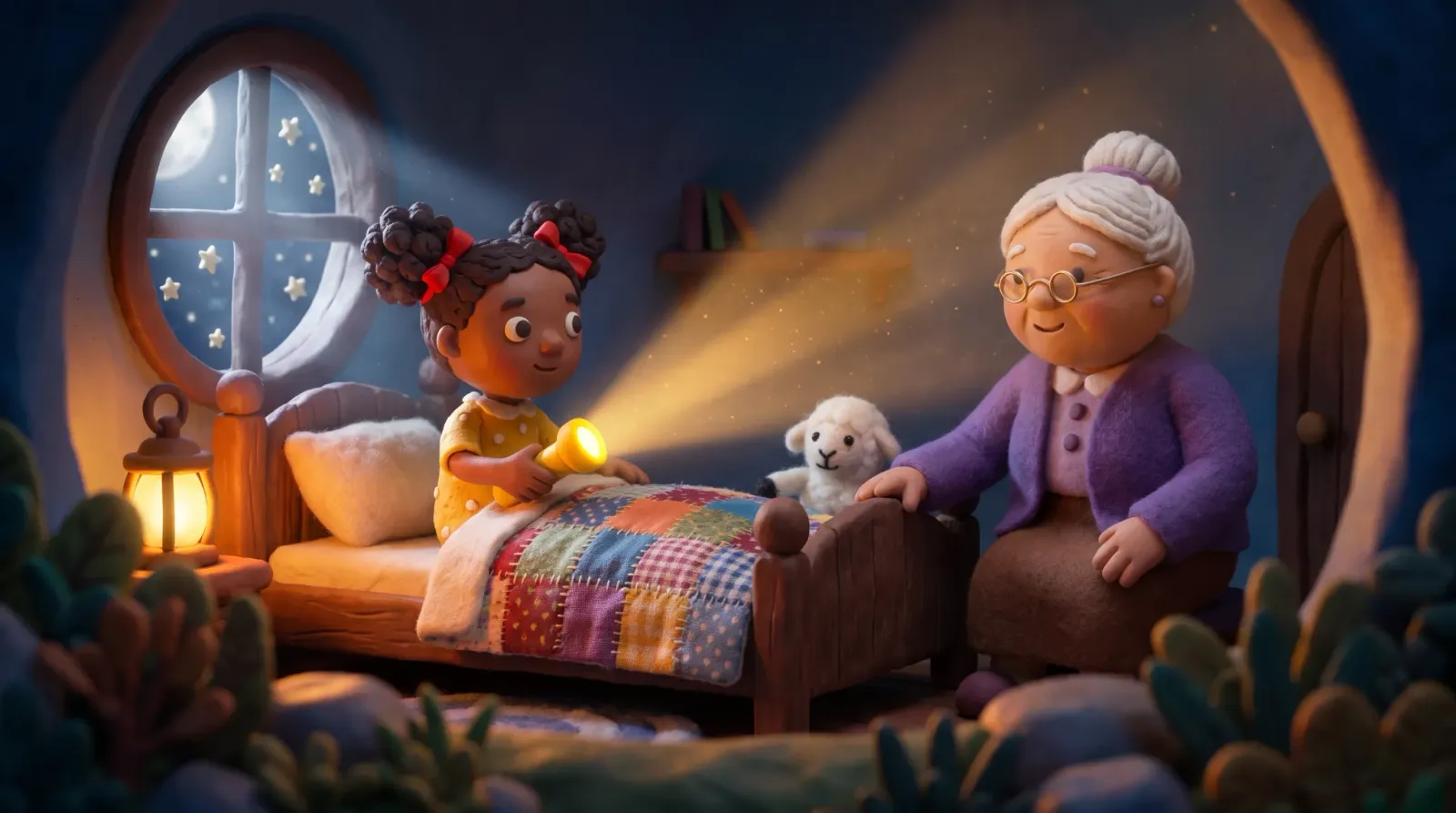 Flashlight on and Grandma’s hand to hold, Lia whispers “I put my trust in You.”
Verses about friendship
Bring these out the week your child and their best friend aren’t speaking, or on a Saturday when the whole family’s raking leaves together.
| Verse | Text (Berean Standard Bible) | Words | Age | Move or game |
|---|---|---|---|---|
| Proverbs 17:17 | A friend loves at all times, and a brother is born for adversity. | 13 | 9+ | Touch index fingers together on “friend” and “brother,” and clap on “at all times.” |
| Ecclesiastes 4:9 | Two are better than one, because they have a good return for their labor. | 14 | 7+ | In pairs, carry a basket of toys together; then the child tries alone and feels the difference. |
| Galatians 6:2 | Carry one another’s burdens, and in this way you will fulfill the law of Christ. | 15 | 7+ | Each person holds a building block; on “carry one another’s burdens,” swap blocks and carry the other’s. |
Proverbs 17:17 has a word most kids haven’t heard: “adversity.” Act it out. You drop a pile of books, your child plays the friend who stops to help you pick them up, and afterward you tell them the mess was the adversity and they were the friend in the verse.
For Galatians 6:2, use the block swap from the table, then bring it home at bedtime: ask your child whose load they could help carry tomorrow, maybe a little brother’s, a friend’s or yours.
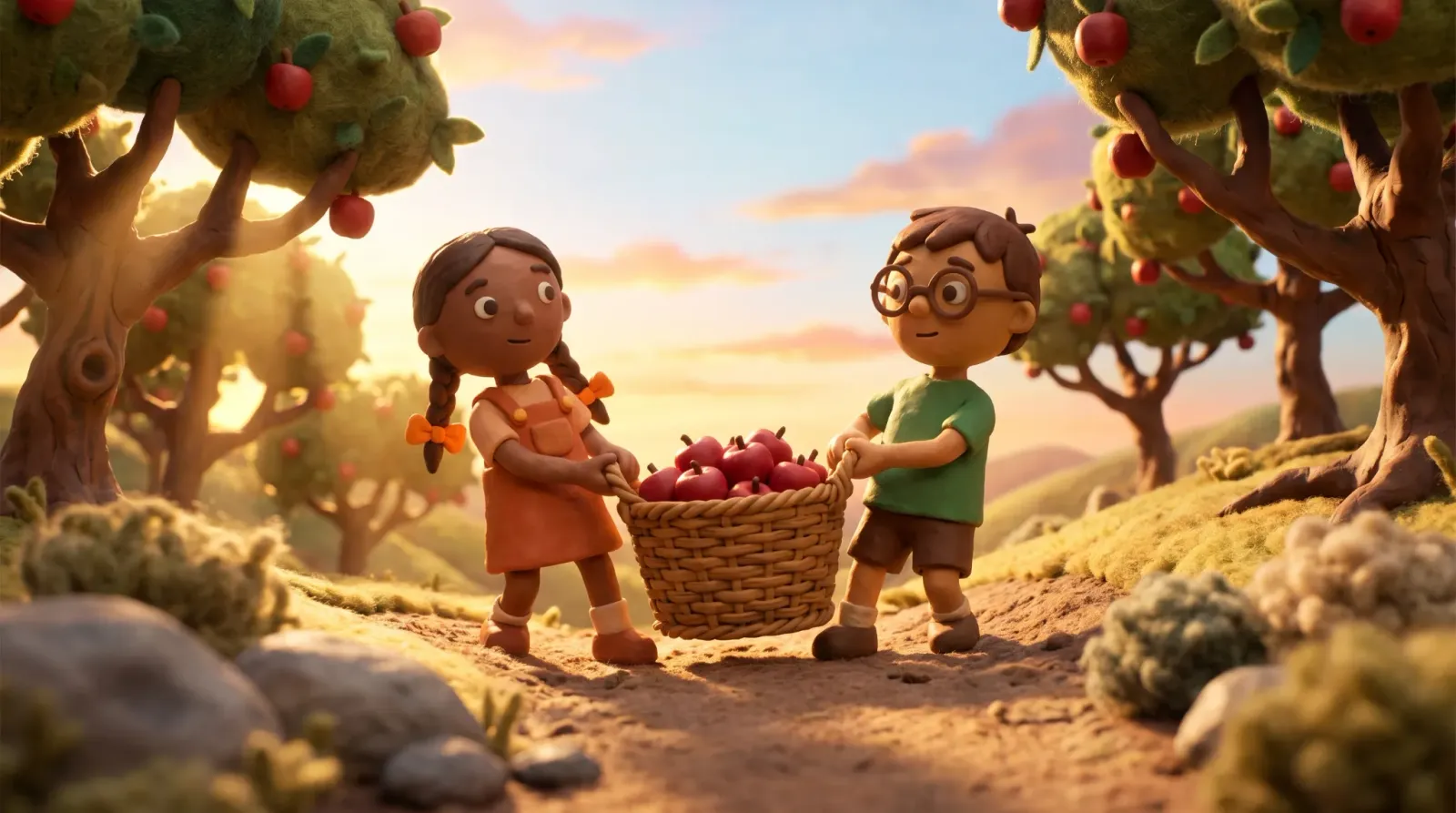 A basket of apples, two sets of hands and Ecclesiastes 4:9 in action.
Verses about thankfulness
Thankfulness verses get a daily workout when you tie them to something you already do. At dinner, have everyone name one good thing from the day before you say the verse together; bedtime prayers work too.
| Verse | Text (Berean Standard Bible) | Words | Age | Move or game |
|---|---|---|---|---|
| Psalm 107:1 | Give thanks to the LORD, for He is good; His loving devotion endures forever. | 14 | 7+ | Hands on chest on “give thanks,” thumbs up on “good,” and a big arm circle on “forever.” |
| 1 Thessalonians 5:18 | Give thanks in every circumstance, for this is God’s will for you in Christ Jesus. | 15 | 7+ | Before saying the verse, each person names one thing from today they’re thankful for, then everyone says it together. |
| Psalm 118:24 | This is the day that the LORD has made; we will rejoice and be glad in it. | 17 | 9+ | Open the curtain or window on the first phrase and hop once on each “rejoice” and “glad.” |
Try singing Psalm 107:1 to the tune of “Row, Row, Row Your Boat” at the table; it’s fine if a few words get squeezed. One phrase needs help: “loving devotion” is something kids rarely hear, so explain it as “love that keeps going.” For 1 Thessalonians 5:18, play a quick “thankful for” round at dinner: the mac and cheese, Grandma’s phone call, soccer practice that ended early.
Psalm 118:24 fits the morning: say it as you open the curtains, with a hop on “rejoice” and “glad.”
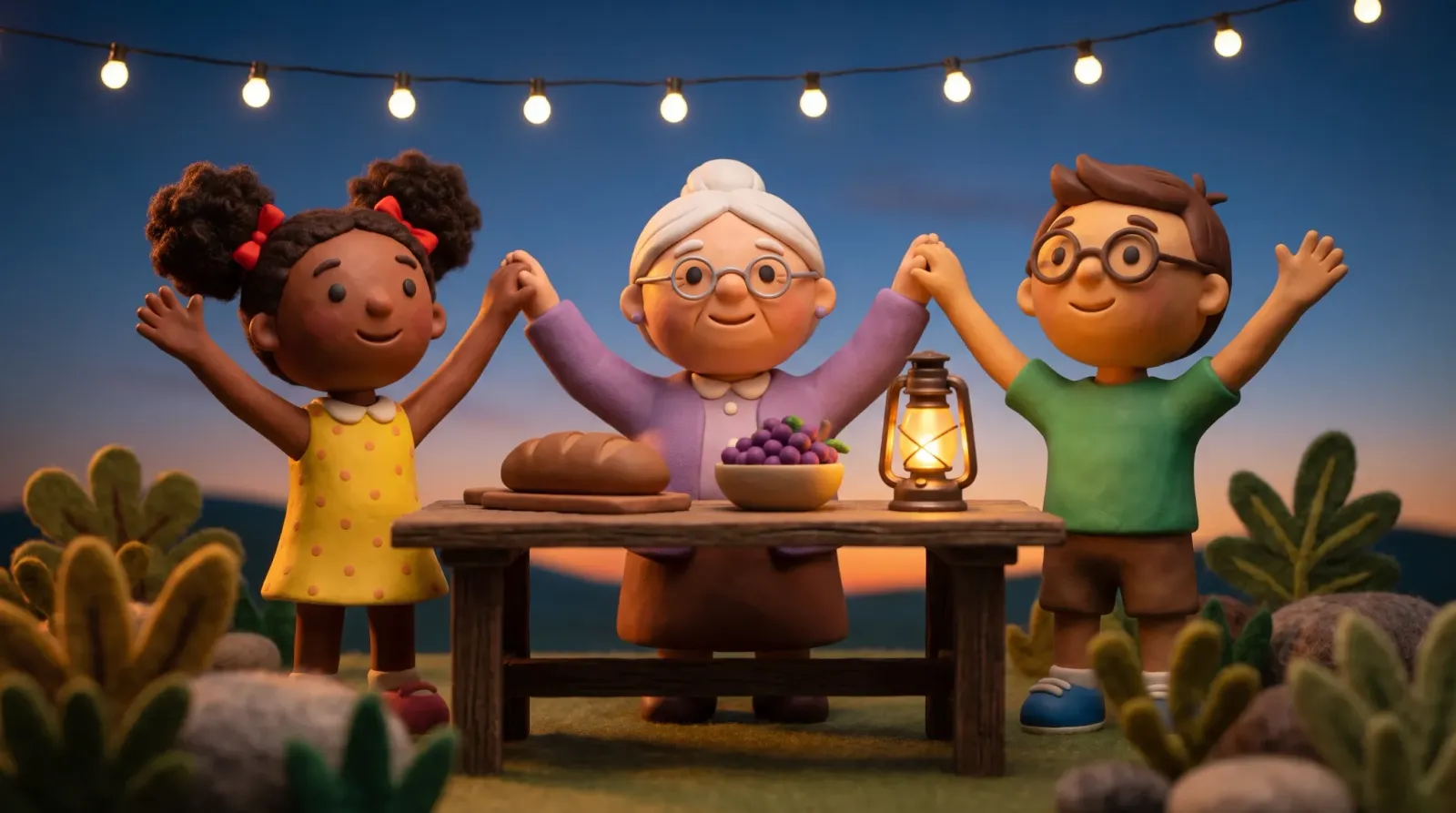 Hands up before the bread gets passed: Psalm 107:1 at the dinner table.
Verses about obedience
Timing matters with obedience verses. Right after a meltdown, your child will hear one as a punishment, so wait for an easy moment, like cleaning up the playroom together. The role-swap game for Ephesians 6:1 keeps it light.
| Verse | Text (Berean Standard Bible) | Words | Age | Move or game |
|---|---|---|---|---|
| John 14:15 | If you love Me, you will keep My commandments. | 9 | 5+ | Hand on heart on “love Me”; on “keep,” close your fist like holding a coin in your pocket. |
| Colossians 3:20 | Children, obey your parents in everything, for this is pleasing to the Lord. | 13 | 7+ | Cup a hand behind your ear on “obey” and give a thumbs up on “pleasing.” |
| Ephesians 6:1 | Children, obey your parents in the Lord, for this is right. | 11 | 7+ | On “children,” point at yourself; on “parents,” point at the grown-up. In round two, swap roles and laugh. |
Colossians 3:20 and Ephesians 6:1 both open with “Children,” which makes the pointing move easy. John 14:15 is the shortest of the three: nine words that tie obeying to loving Jesus.
For the role swap, your child gets to be the boss for one minute. Whatever they order (“waddle like a penguin to the fridge,” “sing your answer like an opera star”), you do it with big, goofy effort. Say Ephesians 6:1 together once you’ve both caught your breath.
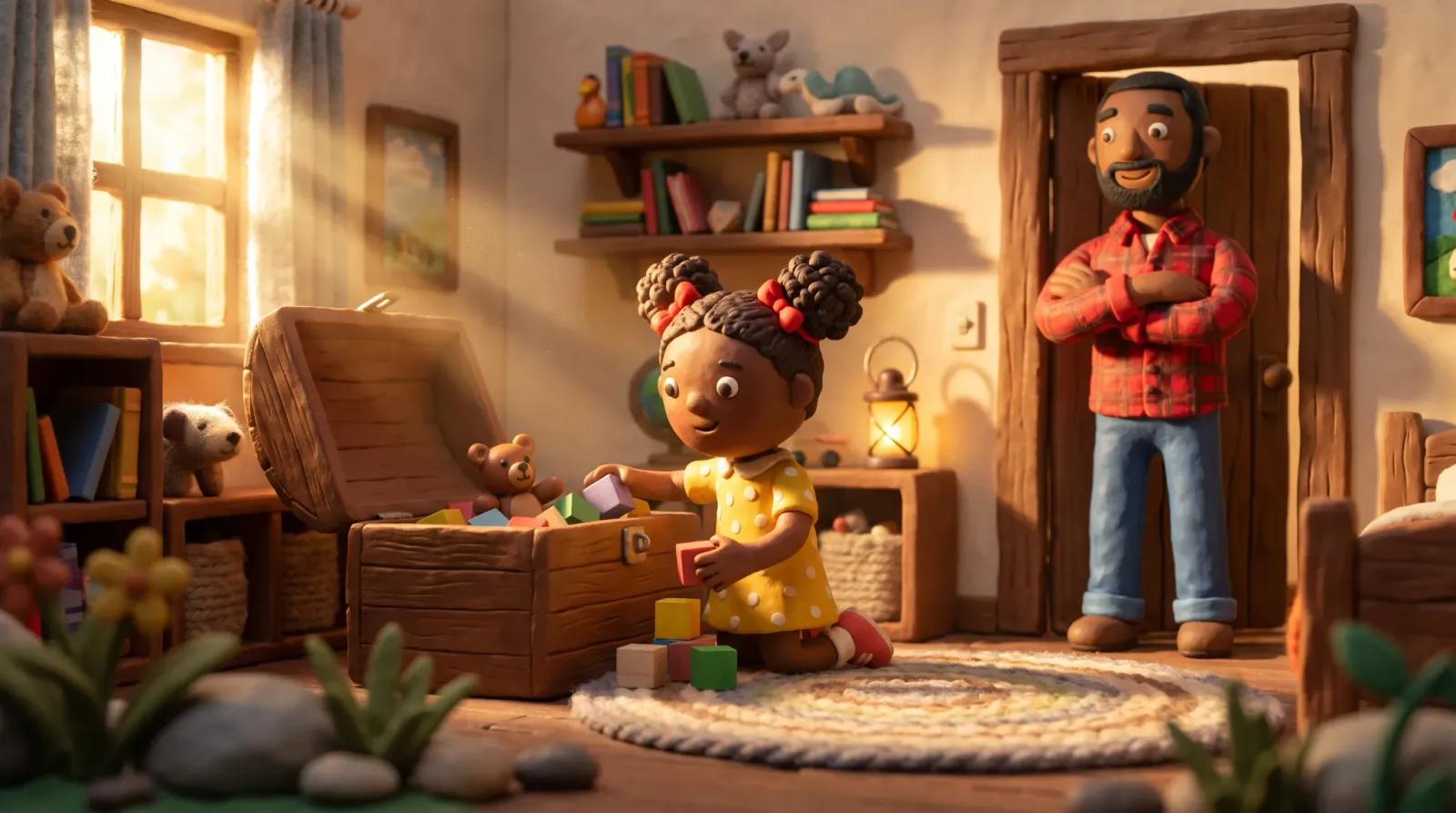 Toys back in the chest, and Dad grinning from the doorway.
Verses about God’s love
Never memorized a verse before? 1 John 4:19 is just seven words, “We love because He first loved us,” and Psalm 23:1 adds only two more. Between the two, the only phrase that needs explaining is “I shall not want.”
| Verse | Text (Berean Standard Bible) | Words | Age | Move or game |
|---|---|---|---|---|
| 1 John 4:19 | We love because He first loved us. | 7 | 5+ | The grown-up reaches out a hand first (“He first loved us”) and the child squeezes it back (“We love”). |
| Psalm 23:1 | The LORD is my shepherd; I shall not want. | 9 | 5+ | Fist forward like a staff on “shepherd” and the other arm rocking a stuffed lamb on “I shall not want.” |
| 1 John 4:11 | Beloved, if God so loved us, we also ought to love one another. | 13 | 7+ | Hug circle: on each “love,” one hug passes to the neighbor until it goes all the way around. |
| Psalm 145:9 | The LORD is good to all; His compassion rests on all He has made. | 14 | 7+ | Open your arms wider on “all”; then name three people and three animals God made. |
Save Psalm 145:9 for kids 7 and up, and explain “compassion” as “God’s kindness and care.” 1 John 4:11 makes a good family hug circle; tell them “Beloved” means “dear ones.” For 1 John 4:19, hold out your hand first and wait for the squeeze. Psalm 23:1 hardly needs a lesson, since kids picture a shepherd with a lamb right away; just explain that “I shall not want” means “I’ll have everything I need.”
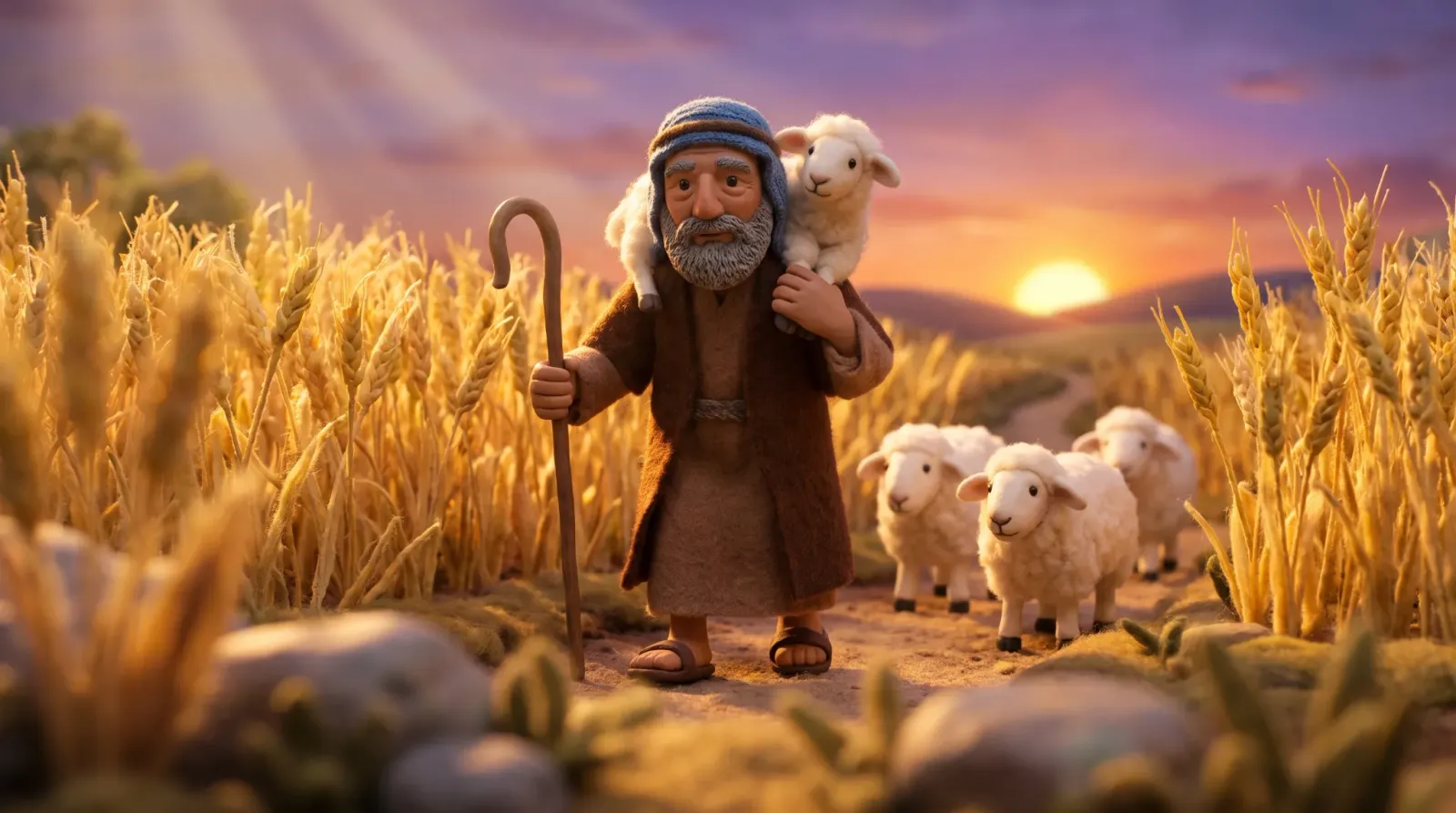 “The LORD is my shepherd,” in clay: a lamb riding on the shepherd’s shoulders.
How to use the list over one week
The plan runs Monday through Friday, and each day your child pulls the verse out of memory with a different game. That daily recall comes from research on testing: in experiment 1 of Roediger and Karpicke’s study of 120 college students ages 18 to 24, students who were tested on a science passage recalled 56% of it a week later, and students who only reread it recalled 42% (Roediger and Karpicke, 2006). With one verse a week, 3 to 5 minutes a day is enough.
| Day | Time | What to do |
|---|---|---|
| Monday | 5 min | Talk about what the verse says, with an example from your child’s day; say the line with the motion three times |
| Tuesday | 3 min | The grown-up starts a phrase and the child finishes it |
| Wednesday | 3 min | The grown-up “slips” on a word on purpose and the child fixes it |
| Thursday | 3 to 5 min | The child says the verse alone, with the motion, to someone else in the house |
| Friday | 5 min | Say it with no motion, write or draw it from memory and check; pick next week’s verse |
At dinner, go around the table and have everyone say one of the older verses; it takes under a minute. Start the list after New Year’s and your child will know all 20 by late May.
To mix up the recall games:
- First letters: write “T L i m s; I s n w” on a sticky note for Psalm 23:1 and see if your child can read the whole verse from it.
- Stepping stones: lay paper “stones” across the rug, one word per stone, and have your child say each word as they hop.
- Clothesline: clip one index card per phrase to a string with clothespins. Take one down each round until the string’s empty and the verse is all from memory.
- Word search: build a Bible word search from this week’s key words. Bible activities for kids has more ideas.
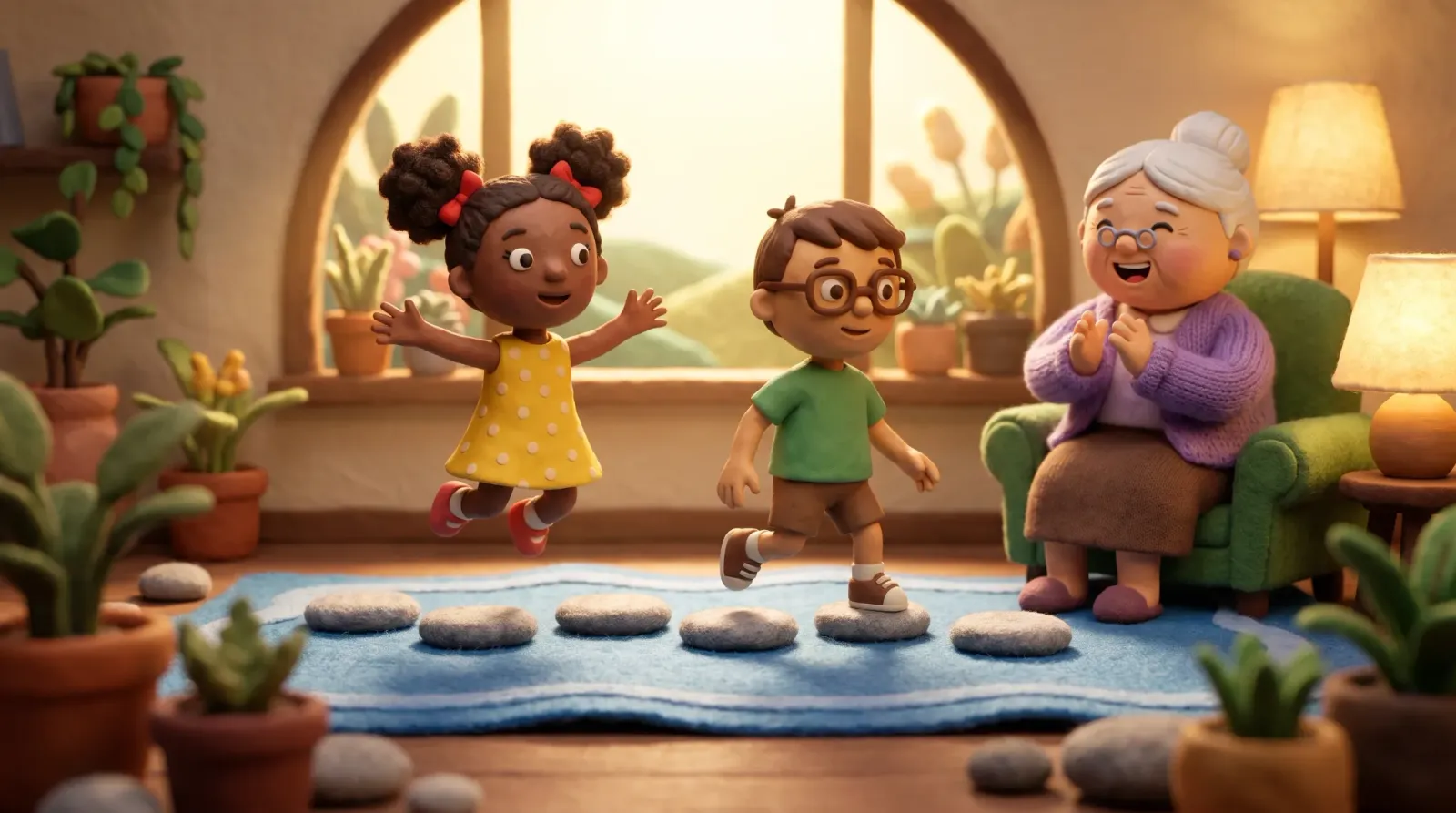 One word per stone, and Grandma Rosa cheers every hop.
What to do when a child forgets or swaps words
Verse gone by Saturday? Pull out the clothesline cards from the list above and rebuild it phrase by phrase before bed. When a word slips, like “I can do everything” for “I can do all things,” turn it into Wednesday’s game: you say the wrong version on purpose and let your child catch it.
Keep the same translation at home and at church if you can. If your church memorizes in the KJV, use the KJV wording at home too, and explain the older words once, out loud, together.
If your family wants more, our guide on how to teach the Bible to kids walks through a daily rhythm of reading, stories and prayer with verses built in, and Bible stories for kids has ten ready-to-tell retellings, most paired with a verse from the same chapter.
Verse of the Day on your phone
Want a fresh verse every day? Check the Verse of the Day in our app: a clay picture, one big key word and the verse itself. Reading it takes about a minute, so it fits in the carpool line.
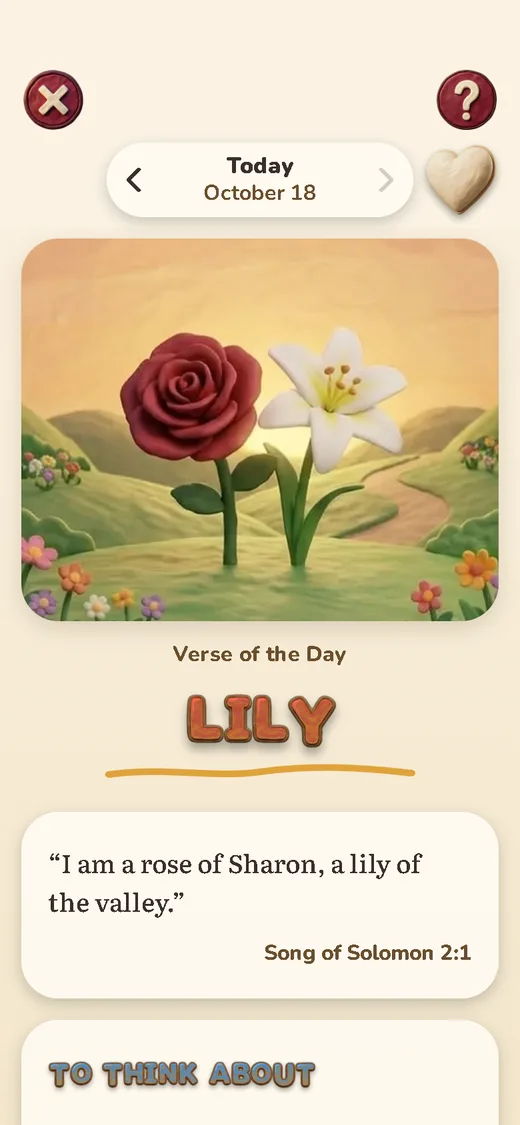 Today’s verse in clay: a lily, the word LILY in big letters and Song of Solomon 2:1 below.
The app also has the full Berean Standard Bible, the translation used in this list, so you can read the chapter around any verse, with narration you can stream when you’re online.
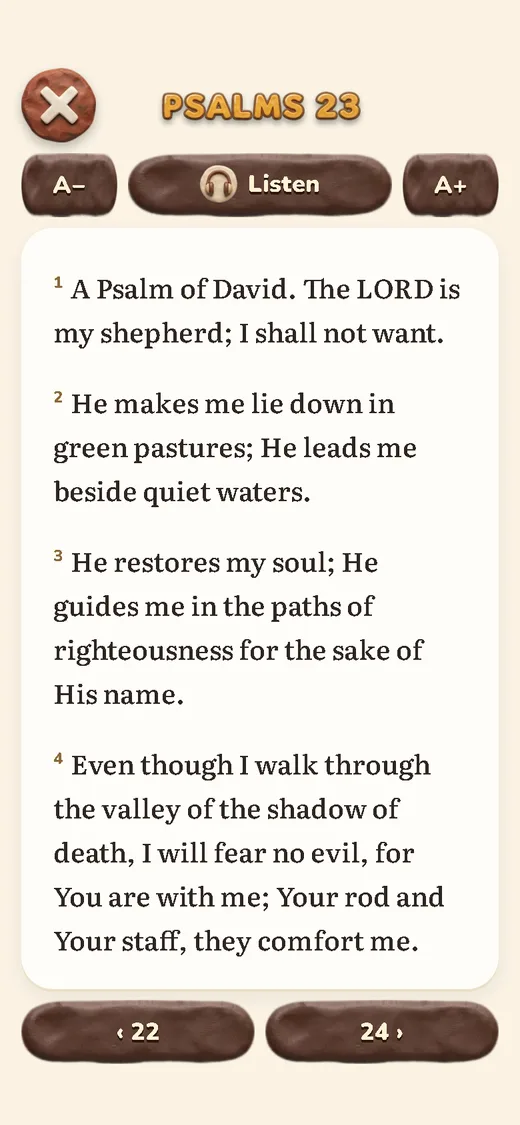 Psalm 23 in the BSB, ready to read or play aloud, with A- and A+ for text size.
How this guide was made. Written by the site’s editorial team and reviewed in October 2026. All 20 verses were copied from the Berean Standard Bible, and we counted the words in each one ourselves, straight from that text; the five verses in the comparison table were also counted in the King James Version. The ages are our own suggestion, based on verse length, with the CDC’s language milestones as a baseline. If you have questions about your child’s development, talk with your pediatrician.
Sources
- Roediger, H. L. and Karpicke, J. D. (2006). Test-Enhanced Learning: Taking Memory Tests Improves Long-Term Retention. Psychological Science, 17(3).
- CDC. Milestones by 3 Years (language milestones).
- CDC. Milestones by 4 Years (language milestones).
- Bible Gateway, King James Version (public domain text used for the word counts in the comparison table).
Frequently asked questions
Which short Bible verses should kids memorize first?
For the youngest, 1 John 4:19 (7 words in the BSB), Psalm 23:1 (9), John 14:15 (9) and Psalm 56:3 (10) are easy starting points. For kids who read, try Philippians 4:13 (11). The list in this article has 20, each with a suggested age.
What age can a child start memorizing Bible verses?
Around 3 or 4, try short phrases of 4 to 6 words with a grown-up doing the motions alongside; that's our own suggestion. The CDC says most 4-year-olds speak in sentences of four or more words and can say some words from a song, story or nursery rhyme. Full one-sentence verses on this list start at age 5, and every kid moves at their own speed.
How many verses should a child learn per week?
Just one. Spend 3 to 5 minutes a day on it, and fold the older verses into a quick review of under a minute.
Which Bible translation should we use with kids?
Whatever your church memorizes in, so the words your child hears on Sunday match the ones at home. This list uses the Berean Standard Bible; if your Sunday school uses the KJV or another version, use that one and count the words in your verse before you start.
How do I get my child interested in memorizing verses?
Give your child some control: let them pick the motion, choose the tune or be the one who catches your "slip" on Wednesday. Tie it to the same spot in the day, like the walk to the bus, so it doesn't get skipped.
Do I need to explain the verse before my child memorizes it?
Yes. A one-sentence explanation tied to your child's day is plenty. Otherwise, words like "adversity" or "loving devotion" are just sounds to a 6-year-old.
Keep reading
-
Fruit of the Spirit for kids: a family guide
Love, joy, peace and the rest of Galatians 5:22-23 in words kids understand, with family moments, games for busy evenings and a four-week verse plan. Read article -
How to memorize the books of the Bible
How to memorize the 66 books of the Bible in order: small blocks, a 7-day plan, self-testing, tricks for look-alike names and a version for kids. Read article -
Noah's ark story for kids, scene by scene
Noah's ark for kids in read-aloud scenes from Genesis 6-9, every number checked in the text, questions by age, crafts and how to tell the flood gently. Read article