
Sunday school games for any class size
Low-prep Sunday school games sorted by age, each with rules, timing, a Bible goal and tweaks for small and large classes, plus a 45-minute lesson plan.
 The Terra Sinai team 16 min read
In this article (12)
Grab paper, a ball and a few small baskets, and you can run most of these games in the room you’re already in, with every kid playing at once and a rule short enough to say in one breath. Each round loops back to the story you just told.
You’ll recognize a lot of these from recess: Simon Says, Telephone, hot potato, freeze dance. Each one here gets a Bible twist, and they’re sorted by age with a goal, supplies, rules, timing and tweaks for small and large classes. Start with the quick-pick table if you’re planning on Saturday night. Further down there’s a 45-minute lesson plan and help for the one-room class where every age shows up. For board games, phone games and Bible games beyond the classroom, see the guide to Bible games for kids and families.
Quick-pick table
Scan this when you’re short on time. The “Number of kids” column is the group size each game handles as written, and the tweaks under each game cover bigger or smaller crowds. Read the ages as rough guides: the CDC defines developmental milestones as things most children can do by a certain age, and its lists stop at 5, while this table goes up to 9 and older. Adjust for the kids you have in front of you.
| Game | Age | Number of kids | Materials | Time |
|---|---|---|---|---|
| “Noah Says” | 3 to 8 | 4 to 25 | None | 5 to 8 min |
| Scene statues | 4 to 8 | 5 to 25 | A song | 6 to 8 min |
| March around Jericho | 3 to 9 | 6 to 30 | Cardboard boxes and paper trumpets (optional) | 8 to 10 min |
| Team charades | 5 and up | 6 to 30 | Folded slips and a basket | 10 to 12 min |
| Whispered verse | 6 and up | 6 to 20 | None | 5 to 8 min |
| Pass the ball with a question | 6 and up | 5 to 20 | A ball and a song | 8 to 10 min |
| Who am I? in three clues | 7 and up | 4 to 24 | 10 cards | 10 min |
| Scenes in the right order | 7 and up | 6 to 30 | One card set per team | 10 to 12 min |
| Bible alphabet | 8 and up | 4 to 20 | Paper, pencil, basket | 8 to 10 min |
| Human timeline | 9 and up | 7 to 18 | Cards with characters | 8 to 10 min |
What makes a Sunday school game work
Before you pick one, picture how the kids will move, how long the explanation will take and which part of the story each child will have to remember.
Everybody’s in, all the time. When ten kids watch one kid take a turn, the other nine start poking each other. Circle games, team games and whole-room movement get around that, and if a game does use turns, cap each one at 30 to 60 seconds.
One rule, one sentence. Say the rule out loud in the car on the way to church. If whoever’s riding with you can repeat it back before the next stoplight, it’ll work with your 4-year-olds.
The game comes after the story. When Zacchaeus has just climbed the tree in your telling, he’s still front and center in the kids’ heads, and the game makes them reach back and grab him. In 2006, psychologists Henry Roediger and Jeffrey Karpicke gave college students two passages: they reread one and tried to write down what they remembered from the other. In experiment 1, a week later, students remembered 56% of the passage they’d been tested on and 42% of the one they’d reread. Those were college students and science passages; in your class, the same kind of recall kicks in when a team has to name the tree Zacchaeus climbed.
The team owns the score. Think of the second grader who never raises her hand. When points go to the team, she can whisper an answer to a teammate and still be part of the win, and kids who can’t read yet learn by watching the older ones.
The American Academy of Pediatrics has weighed in on play, too. Its 2018 clinical report, led by Michael Yogman, says age-appropriate play with parents and with other kids builds social, thinking and language skills along with self-control.
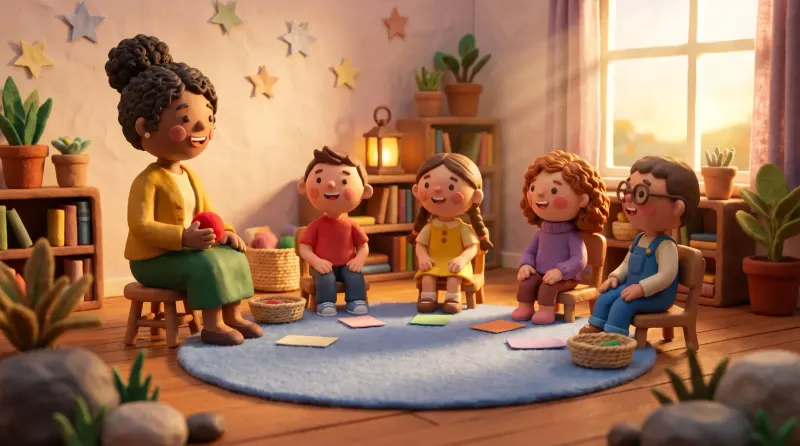
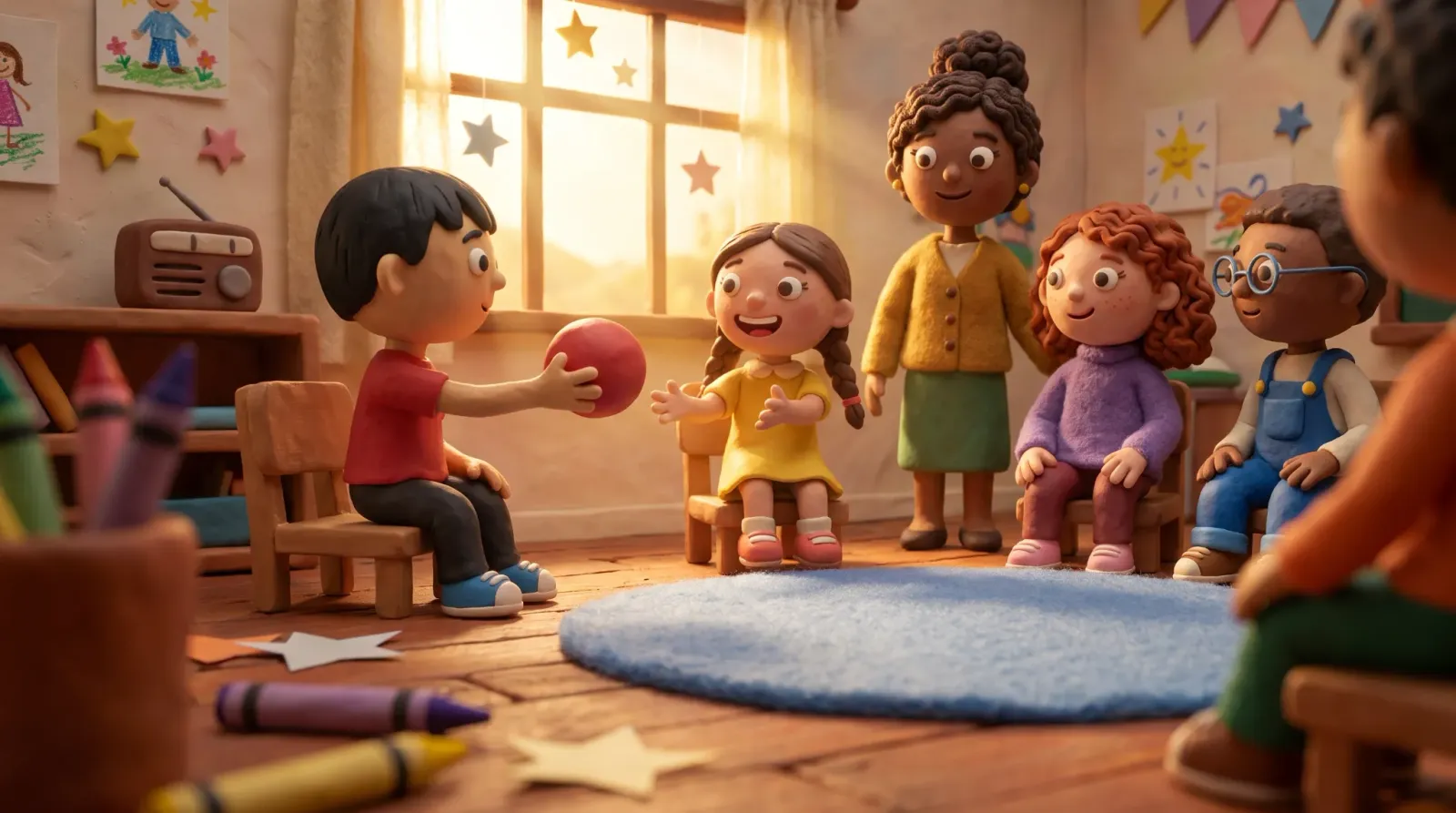 Whoever’s holding the red ball when the music cuts out gets the next question from Miss Lia.
Sunday school games for ages 3 to 5
At this age, kids learn with their whole bodies. Keep the rule short and the rounds quick, use pictures whenever you can, and skip any game where one wrong move puts a child on the bench.
“Noah Says” (ages 3 to 8, 5 to 8 minutes)
Bible goal: listen closely and obey, the way Noah did everything God commanded him (Genesis 6:22).
Materials: none.
How to play: it’s Simon Says with Noah in charge. “Noah says flap like a bird!” gets everyone flapping. A plain “Hop!” with no “Noah says” in front should leave everyone still, and anyone who hops anyway makes their best monkey face and keeps playing.
Small class (up to 8): let a different child be Noah each round.
Large class (15 or more): two helpers call commands from opposite ends of the room while you walk around cheering on the kids who get it right.
To close: “Did a command ever catch you moving? What do you think Noah did the day the rain started?”
Scene statues (ages 4 to 8, 6 to 8 minutes)
Bible goal: rebuild the central scene of a story and put into words what each character feels.
Materials: an upbeat song you can pause.
How to play: think freeze dance with a Bible scene at every pause. Kids dance while the music plays. When you stop it, name a scene (“Jonah inside the fish,” “Noah sending out the dove,” “Jesus blessing the children”) and everyone freezes. Walk among the statues, tap one on the shoulder and ask, “Who are you in this scene? How do you feel?”
Small class: run the same scene twice, and the second time each child picks a different character.
Large class: half the class dances while the other half watches and guesses the scene. Then they switch.
To close: “When you froze as Jonah, what were you thinking? How do you think the children felt when Jesus blessed them?”
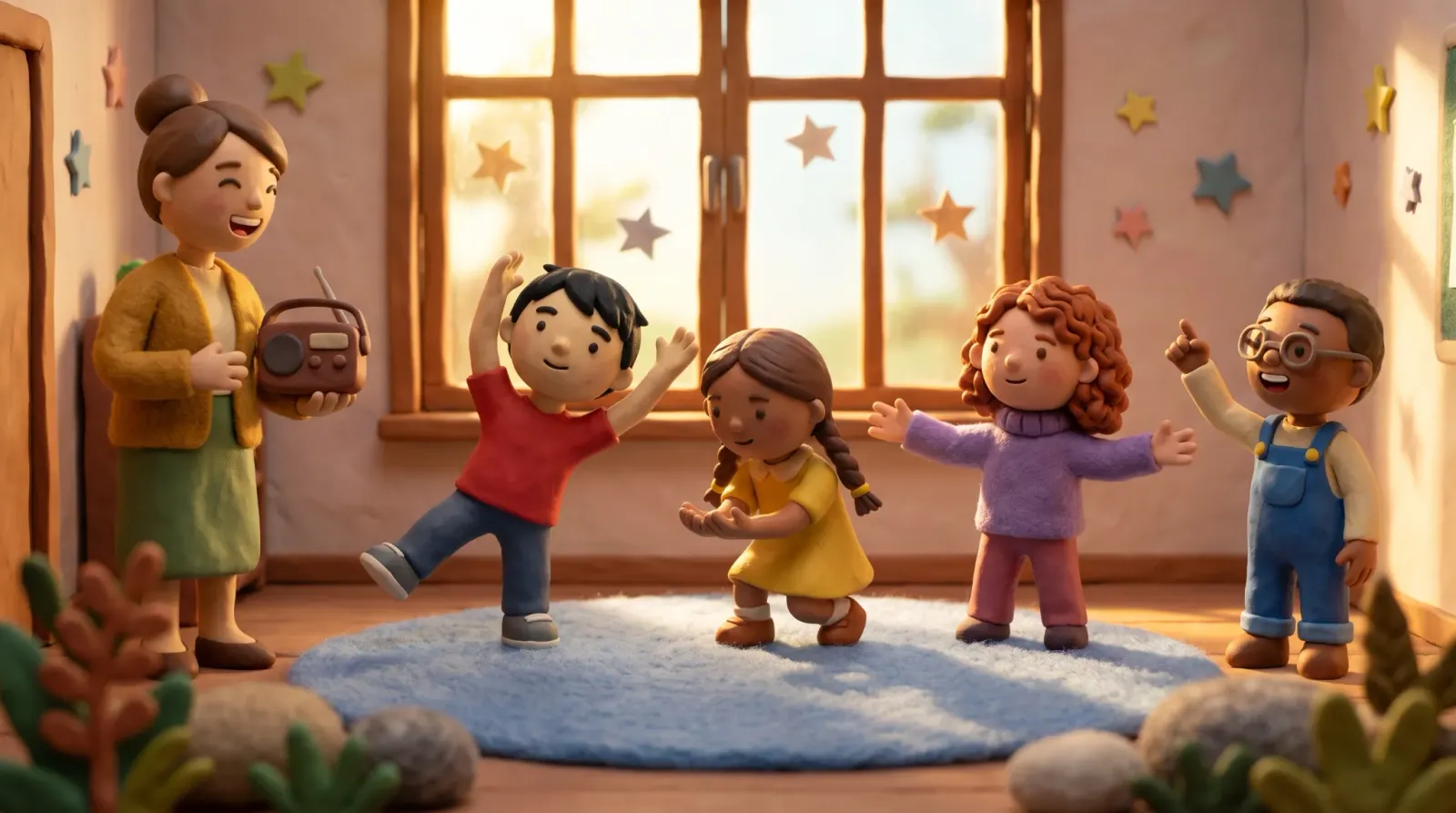 Music off, and every kid holds a Zacchaeus-in-the-tree pose.
March around Jericho (ages 3 to 9, 8 to 10 minutes)
Bible goal: remember that the people followed an unusual command and trusted God’s promise (Joshua 6).
Materials: cardboard boxes for the wall, rolled-paper trumpets (optional, one per child) and two chairs to mark the “city.”
How to play: tell the story first. For six days the people walked around the city once a day without a word while the priests blew their trumpets, and on the seventh day they went around seven times. Then let the kids act it out. They line up and walk six short laps around the room, one for each “day,” with a “priest” up front blowing the trumpet and everyone else quiet. On the “seventh day” they go around seven times in a row, stop, shout together and knock down the tower of boxes in the middle of the room.
Small class: before the march, each child adds a box to the wall, so everyone helped build what comes down.
Large class: run two lines that cross in the middle of the room, each with its own “priest” in front.
To close: “Was it tough to keep quiet for six laps? What do you think the people inside the city were saying?”
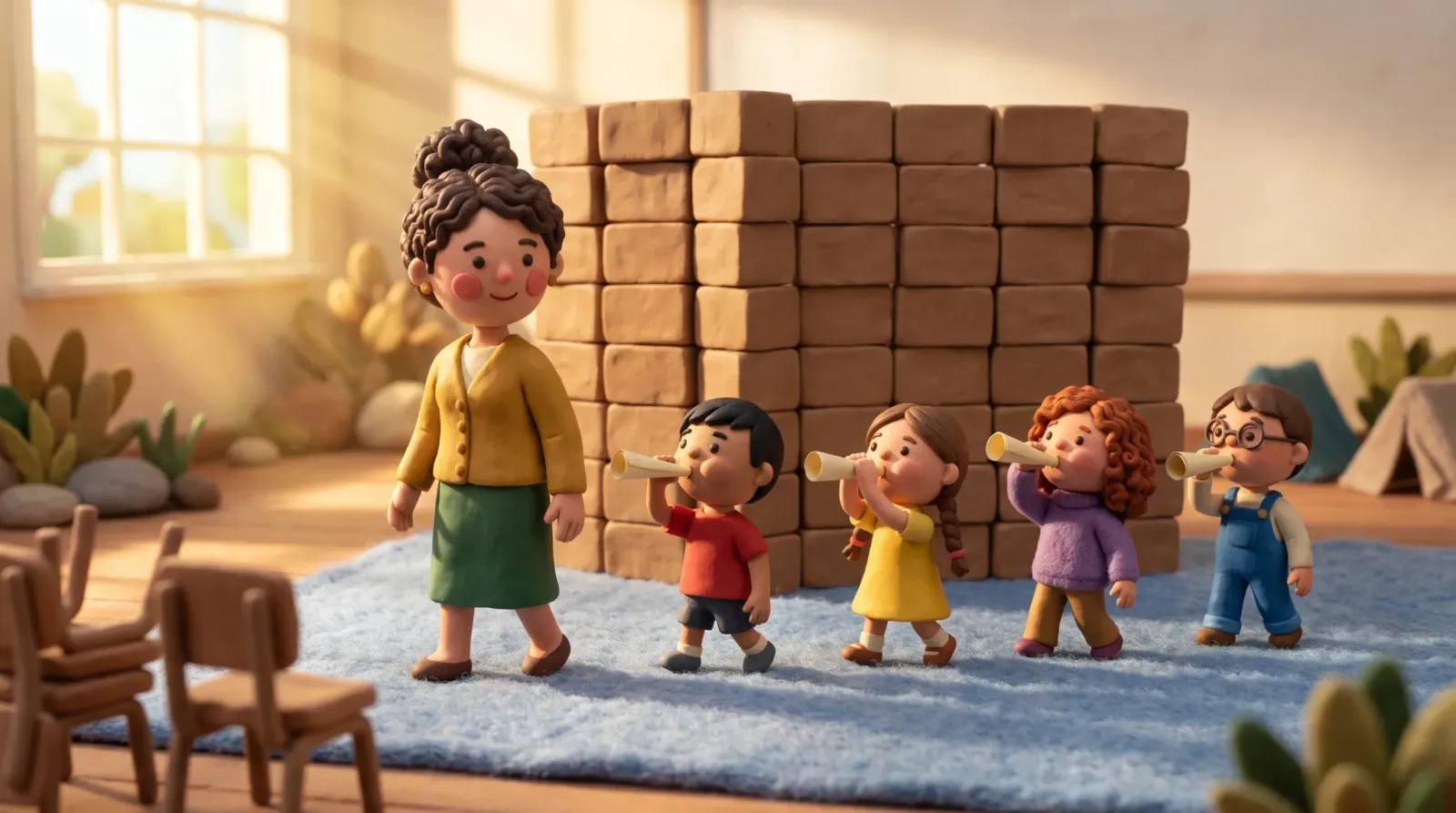 Paper trumpets up, mouths shut: one more lap before the box wall comes down.
Bible games for Sunday school, ages 5 to 8
Plenty of kids this age are just starting to read, so these games lean on short rounds, partners and teams, with as little reading as possible.
Team charades (ages 5 and up, 10 to 12 minutes)
Bible goal: act out a Bible scene without words so the team can name the story and say what happened.
Materials: folded slips with scenes (Noah loading the animals, David with his sling, Peter walking on water, Zacchaeus up in the tree) and a basket.
How to play: make two teams. On each turn, one player draws a slip and has 60 seconds to get their team to guess the scene without talking. Every right guess is a point for the team. Kids who can’t read yet draw a picture card and act that out.
Small class: play as one team with 5 minutes on the clock. Count the scenes the kids get, and next week try to beat that number.
Large class: make four teams. Each one draws a scene and performs it while the rest of the room guesses.
To close: “What move gave it away? If you could step into David’s scene, what would you tell him?”
Whispered verse (ages 6 and up, 5 to 8 minutes)
Bible goal: listen carefully to the Bible text and repeat it word for word. A short verse like 1 John 4:19 works well.
Materials: none.
How to play: it’s Telephone with a Bible verse. Kids stand in a line or sit in a circle. Whisper the verse to the first child, who whispers it to the next, all the way down the line. The last child says out loud what they heard, and you read the verse as it’s written. Once everyone’s done laughing at what changed, the class says the real verse together twice.
We love because He first loved us. (1 John 4:19, Berean Standard Bible)
Small class: play two rounds. In the second, the goal is to get the verse to the end of the line exactly right.
Large class: send the same verse down two or three lines, then have each line say its version and check which one kept every word.
To close: “Where did the verse fall apart? Can you say it now without peeking?” To help the verse stick after the game, see the article on Bible verses for kids.
Pass the ball with a question (ages 6 and up, 8 to 10 minutes)
Bible goal: review the facts of the story you just told.
Materials: a soft ball and a song you can pause.
How to play: play it like hot potato. Kids sit in a circle and pass the ball while the music plays. When it stops, whoever’s holding the ball answers a question about the story, such as “Why did Zacchaeus climb the tree?” (to see Jesus, Luke 19:3-4). If they don’t know, they can call on a friend for help. Ask only about what you told in class.
Small class: the child who just answered asks the next question.
Large class: two circles, two balls and a helper in each circle.
To close: “Who asked the hardest question today? What’s one thing about Zacchaeus you didn’t know before class?”
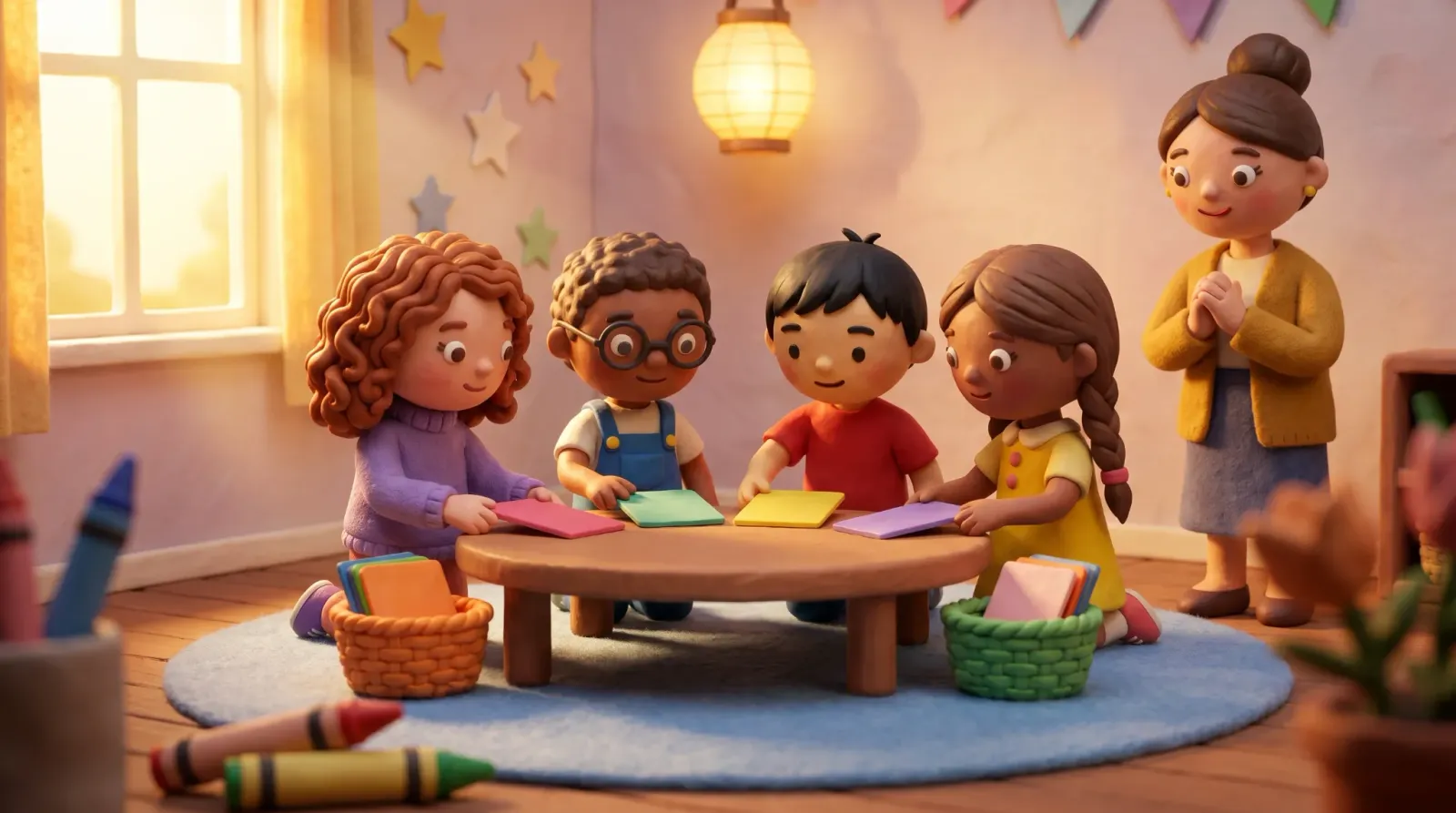 Heads together over the low table, a team works out which scene card comes next.
Sunday school activities and games for ages 7 to 12
Bring out a scoreboard and watch this age group light up. Balance the teams, put a timer on the clues and ask questions that make kids explain their thinking.
Who am I? in three clues (ages 7 and up, 10 minutes)
Bible goal: recognize characters from clues and connect each one to what they did.
Materials: 10 cards, each with one character and three clues that go from vague to obvious.
How to play: read the first clue. A team that guesses on that clue earns 3 points, on the second 2 and on the third 1. Here’s Daniel: “I served kings in Babylon.” “I prayed by my window three times a day.” “God shut the lions’ mouths for me.”
Small class: kids play in pairs against the teacher, who takes the point when nobody guesses.
Large class: four teams write their answer on a slip and hold it up at the same time, so the loudest team doesn’t take every round.
To close: “Which clue tipped you off? If Daniel visited our class, what would you ask him?” For more question ideas and round formats, see the guide to Bible trivia.
Scenes in the right order (ages 7 and up, 10 to 12 minutes)
Bible goal: master the sequence of a story from beginning to end.
Materials: for each team, 6 cards with drawn scenes (no words) from one story, shuffled in a small basket. With Ruth, for example: leaving Moab with Naomi, gleaning in the field, meeting Boaz, the night at the threshing floor, Boaz at the town gate and baby Obed.
How to play: each team dumps out its basket, lays the cards in the order the story happened and raises a hand when it’s done. You check the order, and the team retells the story card by card. The first team to get it right earns 2 points; every team after that, 1.
Small class: one team, with 8 cards in the basket to raise the challenge.
Large class: teams of 5, each with a different story. At the end, they trade baskets.
To close: “Which card got your team arguing? Why did Ruth stay with Naomi when Orpah went home?”
Bible alphabet (ages 8 and up, 8 to 10 minutes)
Bible goal: collect names of Bible characters, places and books.
Materials: slips with the letters of the alphabet (leave out Q, W and Y) folded in a basket, plus paper and pencils.
How to play: on each turn, a child draws a letter and has 10 seconds to name something from the Bible that starts with it: A for Andrew, B for Bethany, C for Caleb. The team scores only if it’s a Bible character, place or book.
Small class: everyone plays together against the clock.
Large class: set a 2-minute timer and have each team write down as many names as it can. Then you check the sheets.
To close: “Which letter stumped your team? Where in the Bible will you look up the new name you heard today?”
Human timeline (ages 9 and up, 8 to 10 minutes)
Bible goal: notice the order in which Bible characters lived.
Materials: one picture card per child, taken in order from this list: Adam, Noah, Abraham, Isaac, Jacob, Joseph, Moses, Joshua, Gideon, Samuel, David, Solomon, Elijah, Jonah, Daniel, John the Baptist, Jesus and Paul. With 18 kids, the whole list is in play.
How to play: hand out the cards face down and ask kids to keep theirs hidden. Without talking, using only gestures, they line up in the order the characters lived. Once everyone’s in place, each child says who they are and one thing their character did.
Small class (under 7): use only as many characters as you have kids, picked from the ones the class already knows.
Large class: build two timelines and compare them at the end.
To close: “Who ended up right after Jonah in our line? Can you think of a story where your character and your neighbor’s character meet?”
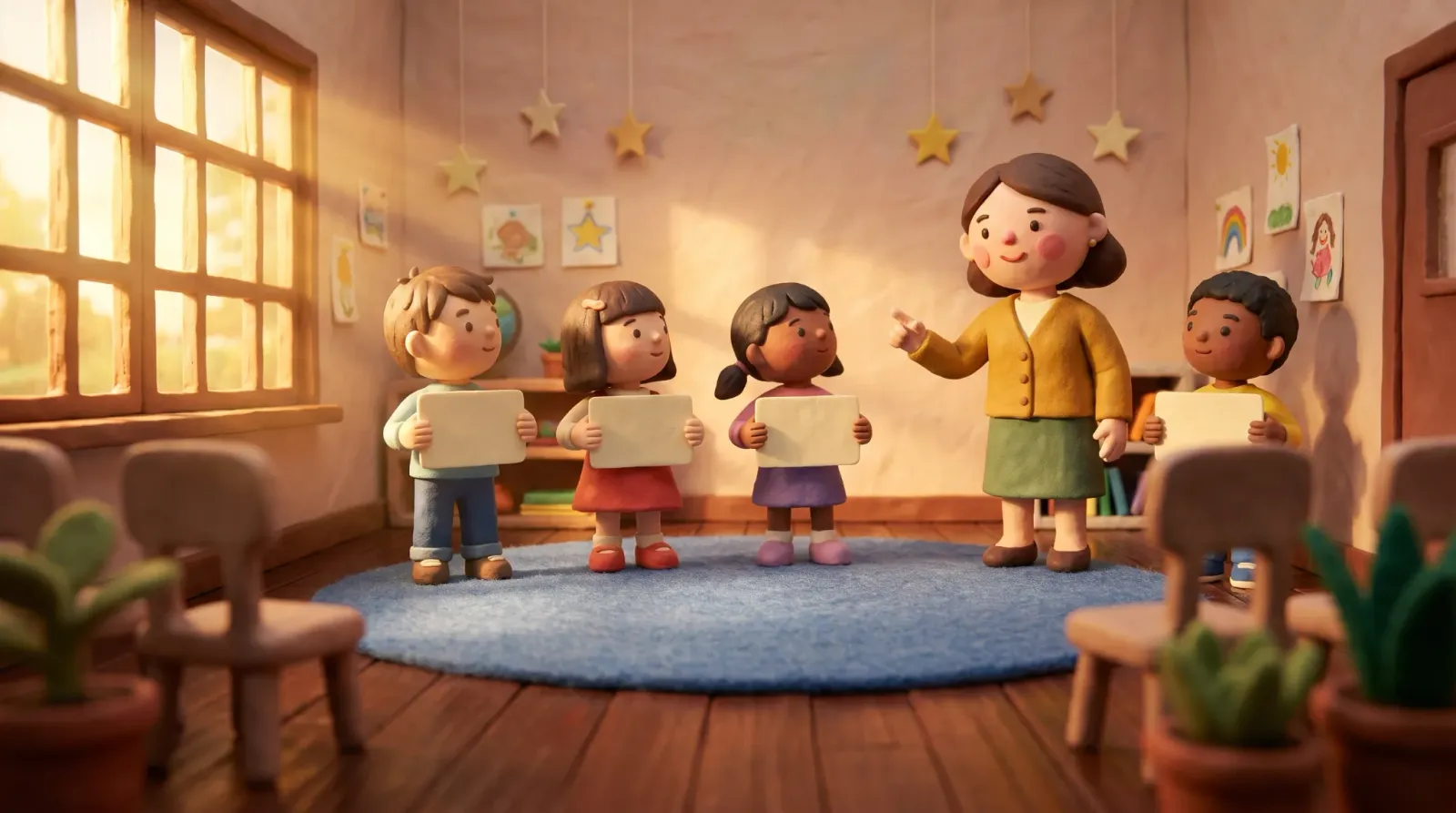 Miss Lia walks the line to see who’s standing in the right spot.
A 45-minute Sunday school lesson plan with a game built in
This plan builds a class around Zacchaeus (Luke 19:1-10) and the Scene statues game. Kids listen, then move, then talk, and you can drop any other story into the same frame.
| Minute | Step | What to do |
|---|---|---|
| 0 to 5 | Welcome | Greet each child by name, sing a short song and open with: “Has anyone ever climbed up on something to see over a crowd, like at a parade?” |
| 5 to 10 | Verse | Show the verse of the week and say it together three times with motions. |
| 10 to 20 | Story | Tell the Zacchaeus story in 8 to 10 minutes, with an expressive voice, a picture of a tree and pauses to ask, “What do you think he did?” |
| 20 to 28 | Game | Scene statues with moments from the story: Zacchaeus climbing the tree, Jesus calling him, Zacchaeus hurrying down, and Jesus at Zacchaeus’ house (Luke 19:5-7). |
| 28 to 33 | Talk | “Why did Zacchaeus want to see Jesus? What did he do after meeting him? Who could you be kind to this week, the way Jesus was with Zacchaeus?” |
| 33 to 43 | Craft | Kids draw their favorite scene, with no writing required. |
| 43 to 45 | Closing | Pray in a circle and send each child home with a question. |
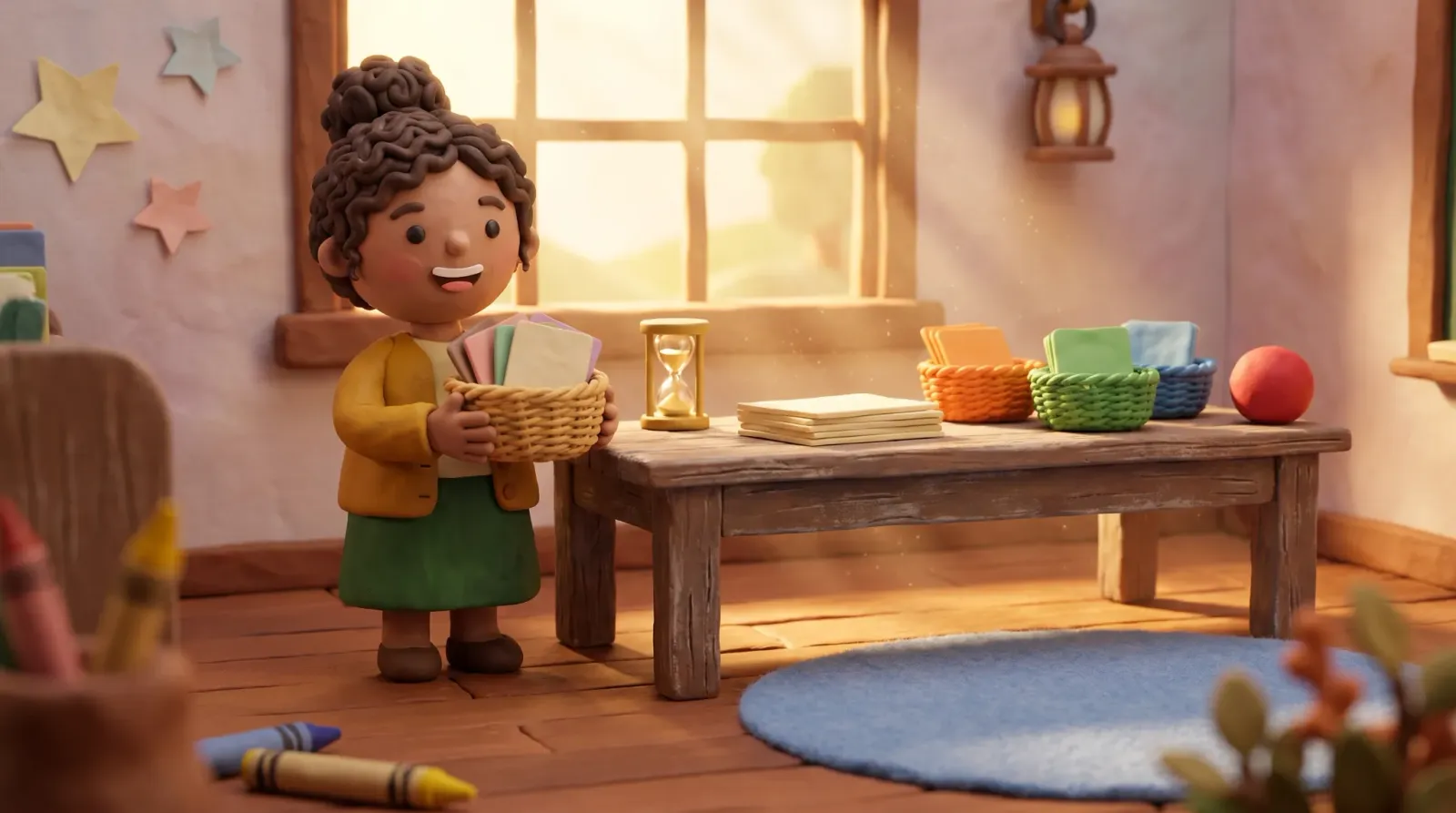 Basket of cards, hourglass, paper: everything the team games need fits on one table.
Wiggly crowd that morning? Flip it: run the movement game before the story and save Scenes in the right order for after. On a calmer Sunday, the plan above gives the game eight minutes right after the story, uses the talk to ask who the kids could be kind to this week, the way Jesus was with Zacchaeus, and lets the drawing settle everyone before you pray.
Pair this plan with a craft from Bible activities for kids, or browse how to teach the Bible to kids for lesson ideas matched to each age group.
Sunday school games for mixed ages
If your church puts every child from 4 to 11 in one room during the service, pick games with several jobs in them, so the 4-year-old and the 11-year-old both have something to do.
Mix ages on every team and give out jobs (reader, artist, answerer, scorekeeper). Little ones can still answer questions if there’s a picture they can point to, and charades works for them with picture cards. In “Who am I?”, let the older kids read the clues aloud while younger teammates help guess.
Picture a class of eight kids from 4 to 11: make two teams of four, each with one older reader, one artist and two younger kids who act out scenes or point to the answer. The reader reads the clue, and the whole team answers together.
Your 10- and 11-year-olds make great co-teachers: let them explain the rules to the little ones and keep score. Leave speed-reading games for another week, since the 4-year-olds can’t keep up.
When the game goes sideways
The rules drag on. If you’re a minute into explaining and kids are already staring at the ceiling, stop talking. Run one slow-motion practice round and let them learn by watching.
The room gets loud. Teach a quiet signal before the first game: you raise a hand, the kids raise theirs and close their mouths. Practice it once at the start of class, and it’ll be ready the moment the noise climbs.
The game drifts away from the lesson. Red Light, Green Light ties right back to Jericho if green means march and red means freeze without a sound, the way Joshua told the people not to let one word come out of their mouths (Joshua 6:10).
The questions only test trivia. “What was Abraham’s father’s name?” rewards whoever memorized a list. Ask something like “Why did Abraham pack up and leave home?” and let them find the answer in Genesis 12:1.
A kid gets knocked out. Nobody sits out in these games. In Bible alphabet, a child who blanks hands the letter to a teammate, and every point goes to the team.
Talk time disappears. Set a phone timer for 10 minutes when the game starts. When it goes off, finish the round you’re in and move on to the questions.
What about phones in Sunday school?
Phones are handy for lesson prep. If you use one with the kids, save it for the end of class, with an adult beside each child who’s playing. The dozens of Bible games in our app, Terra Sinai, work without internet, from word search and crosswords to story games like David’s Sling.
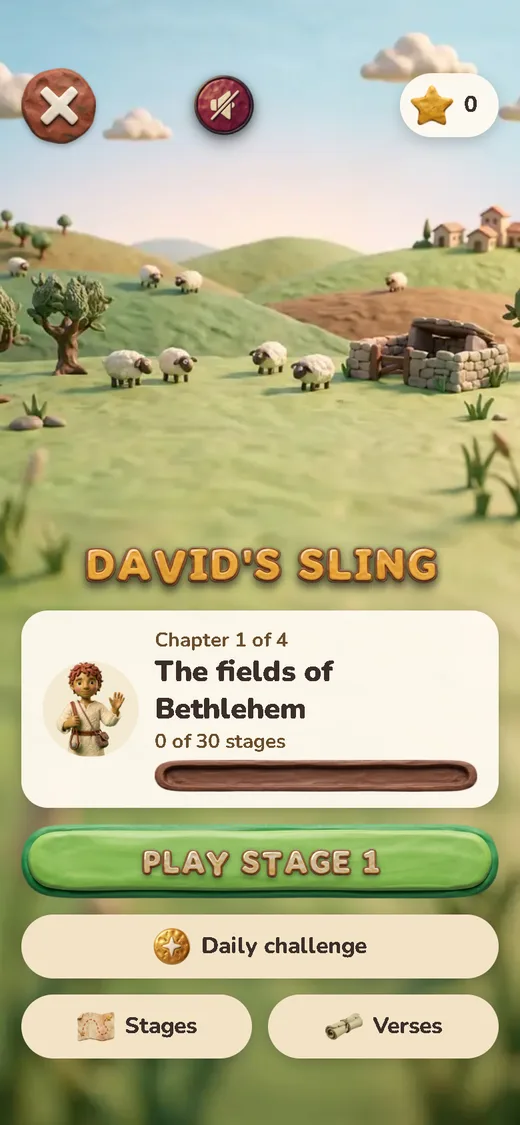 The first screen of David’s Sling, with the flock grazing outside Bethlehem.
If your room has a projector or a TV you can cast to, put a word game up on the big screen and let the kids call out the letters.
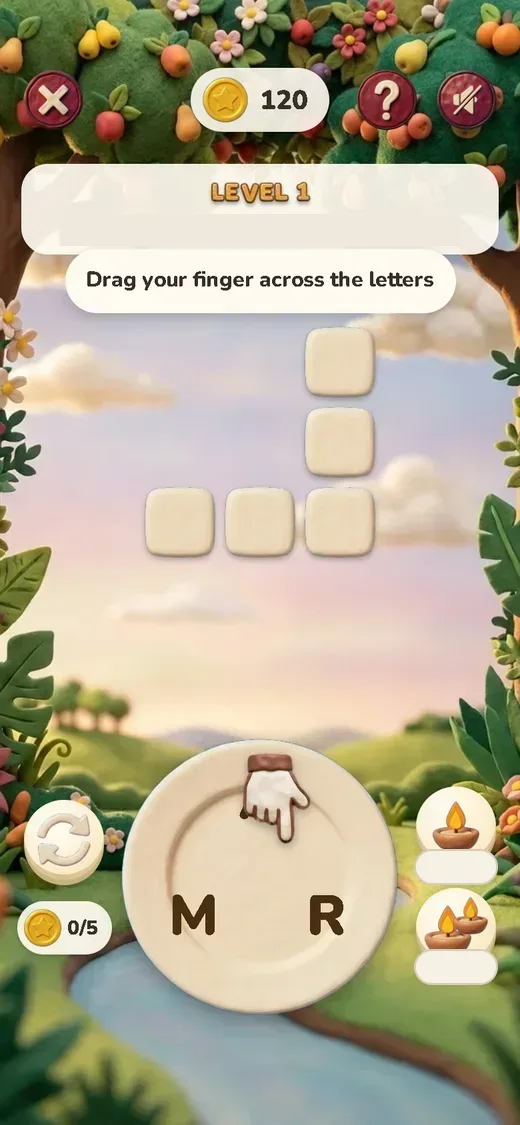 Each word gets spelled by sliding a finger around the letter wheel.
Start this Sunday
Pick one game from the table tonight and run through it once in your living room, so you’ll catch the confusing step before Sunday. A ball, a phone for music and a stack of index cards cover most of this list. When your class is ready for something new, pull this week’s story from Bible stories for kids.
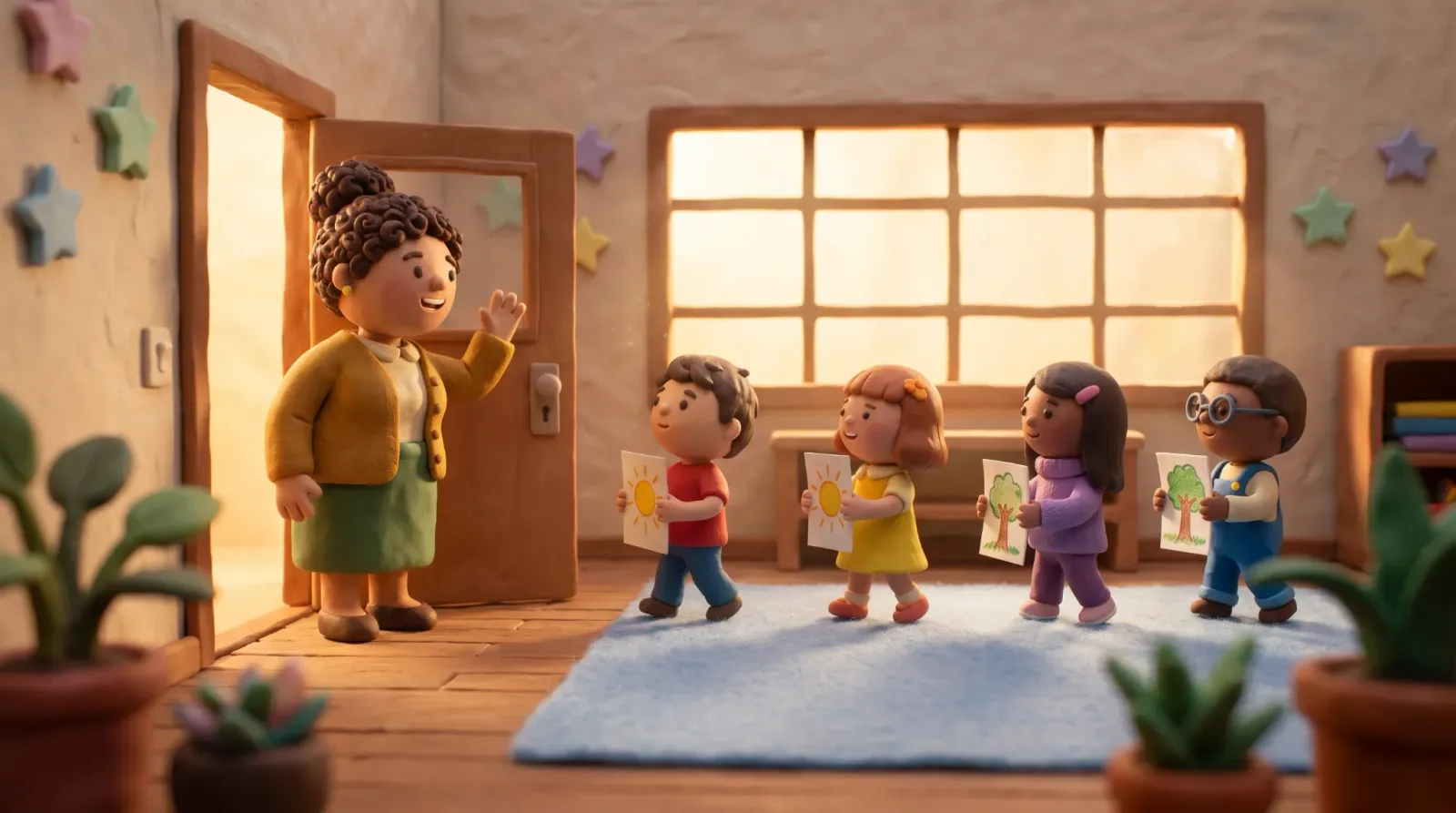 Drawings in hand, the kids head home with one question to talk over at dinner.
How this guide was made. Written by the site’s editorial team and reviewed in October 2026. The verses are copied from the Berean Standard Bible. We read Roediger and Karpicke’s study in the original, pulled up the AAP’s report on play in PubMed, and started the age ranges from the CDC’s milestones, which stop at age 5. Treat the ages as a starting point and adjust each game to fit your class.
Sources
- Roediger, H. L., and Karpicke, J. D. (2006). Test-Enhanced Learning: Taking Memory Tests Improves Long-Term Retention. Psychological Science, 17(3). doi.org/10.1111/j.1467-9280.2006.01693.x
- Yogman, M., et al. (2018). The Power of Play: A Pediatric Role in Enhancing Development in Young Children. Pediatrics, 142(3). American Academy of Pediatrics. pubmed.ncbi.nlm.nih.gov/30126932
- Centers for Disease Control and Prevention. CDC’s Developmental Milestones. cdc.gov
Frequently asked questions
What Sunday school games need no materials?
You can run "Noah Says" and the whispered-verse game with nothing but your voice. No speaker in the room? Clap a beat for scene statues. Charades takes a few folded slips and a basket, and the Jericho march needs some cardboard boxes from the recycling bin.
What Bible games work for preschoolers?
Preschoolers like whole-body games with a single rule. Try "Noah Says," or have them freeze as statues in a Bible scene. Keep each round to 3 to 5 minutes and get everybody moving together so no one’s stuck in line.
How do you adapt a Sunday school game for a small group or a large one?
Got a handful of kids? Play in one circle and join in yourself. When attendance climbs to 15 or more, split into teams of 5 or 6 with a helper on each, all playing at the same time.
How long should a game last in Sunday school?
About 8 to 12 minutes of a 45-minute lesson. Run it while the story’s still fresh, right after you tell it, and hold back about 5 minutes at the end to talk it over.
How do you run a game with mixed ages?
Put a confident reader on every team, then give the younger kids jobs like drawing, acting or pointing to the right picture card.
Keep reading
-
Bible characters: who they were and where
The main Bible characters in story order, from Adam to Paul, with the book and chapter for each, what they did, what they teach and a section on the women. Read article -
Fruit of the Spirit for kids: a family guide
Love, joy, peace and the rest of Galatians 5:22-23 in words kids understand, with family moments, games for busy evenings and a four-week verse plan. Read article -
How to memorize the books of the Bible
How to memorize the 66 books of the Bible in order: small blocks, a 7-day plan, self-testing, tricks for look-alike names and a version for kids. Read article